Is the LEGO Woodland Mushrooms Worth Buying?
8.42/10. Worth buying. A forest floor rendered in plastic, from fly agaric spots to bracken fronds, with nothing about it feeling like a toy.
Comparing your options? See where it lands in our LEGO botanical collection, every set ranked.

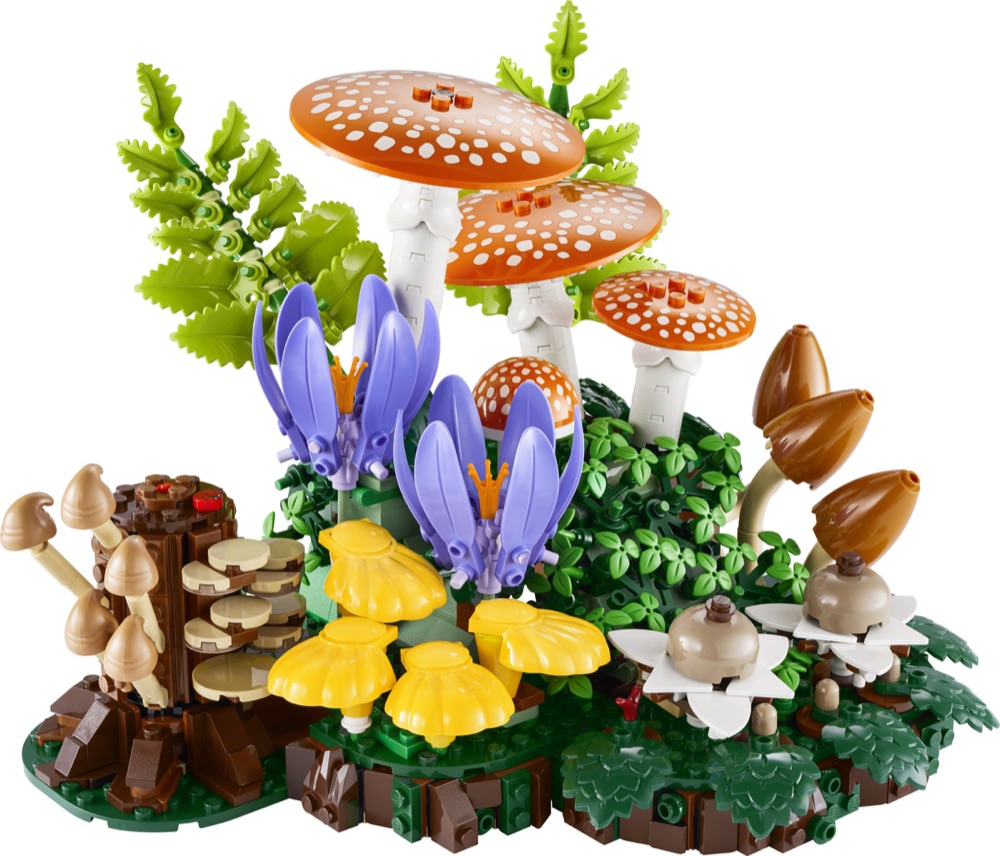
I have built a lot of Botanicals sets at this point, and most of them chase the same handful of subjects: roses, orchids, a bouquet dressed up for a shelf. Woodland Mushrooms goes somewhere stranger, and I mean that as high praise. This is a forest floor. It is fly agarics with their spotted red caps, fibrecaps, earthstars, chanterelles, bonnets and oyster mushrooms, all clustered together the way you would actually find them after a wet week in October. Nobody asked LEGO to make a fungi diorama. They made one anyway, and it is one of the more surprising Botanicals releases in years.
At 806 pieces this is also one of the larger sets in the line, and the piece count buys real variety rather than padding. Each mushroom species uses a different construction technique to hit its silhouette, which means the build never settles into a rhythm you can zone out through. I found myself slowing down on purpose, which does not happen with every plant set I put together.
Woodland Mushrooms is built in clusters rather than as one continuous structure, and that structure shapes the whole experience. You start with the fly agarics at the center, since they anchor the composition visually and physically, then branch out to the smaller fungi and the two purple autumn crocuses that frame the scene. Each cluster is its own small puzzle, and LEGO uses different techniques for each species so the build never repeats itself.
The fly agaric caps are the visual signature of the set, and the technique behind them is clever. Red plates and tiles stack over a domed core with small white elements inset to create the spotted texture, and the underside gills use a fan of thin plates radiating from a central stem. It looks fussy in the instructions and comes together faster than expected, with the payoff being a mushroom cap that actually reads as domed rather than flat.
The earthstars and chanterelles introduce different problems. Earthstars need a star-shaped base that opens outward, built from angled plates that have to sit at consistent angles across five or six points or the whole thing looks lopsided. Chanterelles use a trumpet-shaped construction that flares at the top, which is a shape LEGO does not build often and required a couple of my own reference photos to confirm I had it oriented correctly.
The bracken fronds and crocuses toward the end of the build function as a palate cleanser after the more demanding fungi sections. They use simpler stacked-leaf techniques you have likely seen in other Botanicals sets, but they matter here because they are what turns a collection of mushrooms into a scene. The fronds arch around the base and the crocuses add a shot of purple that breaks up the reds, whites, and browns of the fungi themselves.
Total build time lands around three to four hours, longer than most Botanicals releases because of the sheer number of small sub-assemblies. Nothing here is difficult in the way a Technic supercar is difficult, but the variety of techniques across nearly a dozen distinct plant forms keeps your attention in a way that a single bouquet set does not.
This is a scene, not a bouquet, and that distinction drives how it displays. The mushrooms are arranged at varying heights and angles across a mossy base, mimicking how fungi actually cluster on a forest floor rather than presenting in a uniform vase arrangement. The base itself uses dark green and brown elements with texture that suggests leaf litter and soil, giving the whole piece a grounded, naturalistic feel that most tabletop plant sets do not attempt.
The color story is the strongest argument for this set as a display piece. Fly agaric red against forest green is a combination that reads instantly, even from across a room, and it is a color pairing LEGO rarely uses together at this scale. The smaller mushrooms in cream, tan, and pale brown fill out the palette without competing with the red centerpiece, and the purple crocuses add just enough contrast to keep the eye moving around the composition instead of locking onto one spot.
At roughly 19 by 25 by 22 centimeters, this occupies a manageable footprint for a shelf, desk, or entry table. It does not demand the real estate that a full Icons botanical arrangement would, which makes it easier to slot into a home office or living room display without rearranging everything around it.
What I appreciate most is that this does not read as a novelty item once it is built. A lot of themed nature sets tip into cartoonish territory, with oversized proportions or cutesy faces worked into the design. Woodland Mushrooms plays it straight. The mushrooms look like mushrooms, scaled up for visibility but proportioned correctly to each other. Put this on a bookshelf next to actual botanical prints or nature photography and it holds its own rather than looking like a toy that wandered into the wrong room.
For a set at this piece count, the value proposition sits in the middle of the Botanicals range. You are not getting a discount bargain, but you are getting genuine variety, close to a dozen distinct plant forms rather than three or four repeated elements dressed up differently. The specialized fungi elements, particularly the domed cap pieces and the star-point plates for the earthstars, are not parts you will find much use for outside of nature builds, but they are distinctive enough that MOC builders working on diorama or terrarium projects will want a few extras on hand.
The green and brown base elements have broader utility. Anyone building landscape MOCs, garden scenes, or forest dioramas will find the moss-textured plates and dark soil-toned pieces genuinely useful outside this set, which is more than can be said for a lot of themed sets where the specialty parts only work in their original context.
Botanicals as a theme has developed a loyal following that treats these sets less like standard LEGO releases and more like collectible art objects, and Woodland Mushrooms fits that pattern. It is not a set you buy for the build alone. You buy it because you want a piece of naturalistic sculpture that happens to be built from bricks, and on that measure it earns its place in the lineup.
The species represented here are not generic mushroom shapes. The fly agaric, Amanita muscaria, is the mushroom most people picture when they hear the word toadstool, red cap with white spots, and it has a genuine cultural history stretching from Siberian shamanic traditions to the mushrooms in classic fairy tale illustrations. It is also mildly toxic and psychoactive, which is part of why it looms so large in folklore even though it is far from the most dangerous mushroom in the forest.
Chanterelles occupy the opposite end of the reputation spectrum. They are prized culinary mushrooms, foraged across Europe and North America for their apricot-like aroma and firm texture, and they cannot currently be commercially cultivated at scale, which keeps wild foraging alive as a practice and a small economy in forested regions. Earthstars are less famous but visually striking, a puffball encased in a star-shaped outer layer that peels back as the mushroom matures, and they are a favorite subject for nature photographers precisely because of that transformation.
Building this set is a small education in fungal diversity whether you intend it to be or not. Fly agarics, earthstars, chanterelles, bonnets, and oyster mushrooms are not related by taxonomy so much as by ecological niche, all of them decomposers or symbionts working the forest floor in different ways. LEGO capturing that range in one coherent scene, rather than picking a single iconic species and calling it done, is what elevates this above a novelty gift set.
Nature enthusiasts and foragers are the most obvious audience, and this set will land well with anyone who spends weekends hiking, mushroom hunting, or simply paying attention to what grows underfoot. If you know the difference between a chanterelle and a jack-o-lantern mushroom, or you have a shelf of field guides at home, this set speaks your language in a way most LEGO releases do not.
Botanicals collectors who already have roses, orchids, or bonsai trees on display will want this as the piece that breaks up an otherwise flower-heavy shelf. The muted, earthy palette contrasts nicely against the brighter florals in the rest of the line, and the scene-based composition offers a different display logic than a single-subject bouquet.
This also works as a genuinely good gift for anyone who loves the outdoors but has aged out of stuffed animals and generic nature decor. It is detailed enough to satisfy an adult builder looking for a relaxing weekend project, and finished enough to sit proudly on a desk without needing explanation.
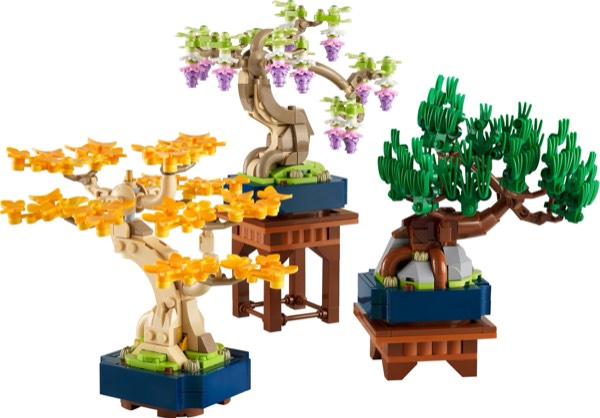
Woodland Mushrooms pairs naturally with the LEGO Bonsai Tree (#10281), another naturalistic Botanicals piece that rewards close inspection over bold color. Both sets favor texture and organic form over the bright, saturated palettes of the floral Botanicals releases, and displayed together they read as a small indoor garden rather than two unrelated boxes.
For a broader nature shelf, the Mini Bonsai Trees (#10373) work well as a companion at smaller scale, filling in gaps around the mushroom scene without overwhelming it. The size variety across the two sets creates a more natural, less uniform display than lining up same-scale pieces in a row.
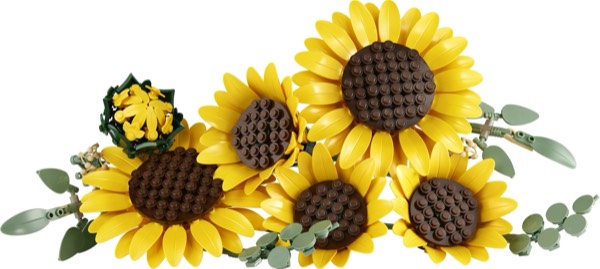
If you want to lean into the woodland theme fully, pairing this with the Sunflower Bouquet (#11502) creates an interesting seasonal contrast, the bright yellow optimism of high summer against the muted, damp-earth tones of autumn fungi. Displayed side by side on a mantel or bookshelf, the two sets tell a small story about the turning of the seasons without saying a word.
Pros
- Genuine variety of fungi species, each with its own construction technique
- Naturalistic scene composition rather than a generic bouquet arrangement
- Fly agaric red against forest green is a striking, unusual color pairing
- Manageable footprint that fits most shelves without dominating them
- Specialty green and brown parts have real utility for landscape MOCs
- Reads as sculpture rather than toy once finished
- Build variety keeps the roughly three to four hour build engaging throughout
Cons
- Fungi-specific elements have limited use outside nature-themed builds
- Earthstar and chanterelle sub-assemblies require careful angle consistency
- Niche subject matter that will not appeal to buyers wanting classic florals
- No lighting or motion elements to bring the scene further to life
Woodland Mushrooms takes Botanicals somewhere the theme has not gone before, and the gamble pays off. Instead of another flower arrangement, LEGO built a small forest floor, complete with the color range and species diversity that makes real fungi hunting rewarding. The build keeps you engaged through variety rather than complexity, and the finished piece earns its shelf space on strength of composition alone.
This lands in EXCELLENT territory because it succeeds at something harder than it looks: making a scene rather than a single object feel cohesive. The techniques used for each mushroom species are inventive without becoming showy, the palette is genuinely striking, and the set rewards the kind of person who already notices mushrooms on a forest walk.
If you have been waiting for Botanicals to do something other than flowers, this is the set that finally does it. Recommended without hesitation for nature lovers and Botanicals completists alike.
- Water Lilies Review - Another 2026 Botanicals release, this one built for water rather than woodland
- Cosmos Flowers Review - The smallest of the three new Botanicals sets, built for a quick colorful build
- Best LEGO Art and Display Sets - Where Woodland Mushrooms ranks among our favorite display-first builds
- April 2026 - What to Buy, Skip, and Wait On - Our monthly buying guide across every current theme
- Retiring Sets Tracker - Keep an eye on which sets are leaving the catalog
I went into this build expecting a novelty item, the kind of set you buy once for a laugh and never look at again. What changed my mind was how seriously LEGO treated the subject. There is no cartoon face hidden on any cap, no wink at the camera suggesting this is meant to be silly. Someone on the design team clearly spent time looking at actual fungi photography, because the proportions between cap size and stem thickness across the different species are correct in a way that only shows up when you have studied the real thing.
The other thing worth noting is how well this set photographs in natural light versus warm indoor lighting. Under daylight near a window, the reds stay true and the greens read as forest rather than lawn. Under warm bulb lighting, the whole piece shifts toward amber and the scene starts to feel like dusk in an actual woodland. Most sets do not change character this much depending on where you put them, and it is worth experimenting with placement before you settle on a permanent spot.
Track it in your vault on GameSetBrick - our free collection app. Log your condition, price paid, and watch the real-time market value.
Track in Your Vault →Save it to your wishlist on GameSetBrick. Share your list with friends and family - every set has a buy button so gift givers know exactly where to go.
Add to Wishlist → GameSetBrick is a free app by The Earl of Bricks. See all features. Scan it. Track it. Trade it.