Is the LEGO Great Pyramid of Giza Worth Buying?
9.8/10. All-time great build. The highest-scoring set in the Earl's library. A masterclass in large-scale geometry.
Comparing your options? See where it lands in our best LEGO Architecture sets, ranked.

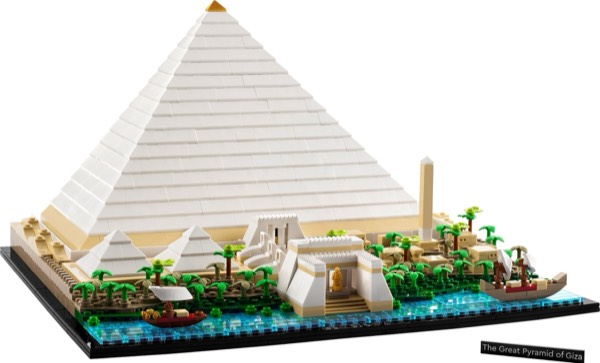
The Great Pyramid sits differently in a LEGO collection than almost any other Architecture set. This isn't about recreating a building, it's about executing a geometric problem at scale, and that distinction matters. Twenty-five years of building taught me that Architecture sets usually lean toward façade details and landmark recognition. This one does neither. Instead, it's 1476 pieces dedicated to capturing the mathematical purity of a four-sided structure tapering toward a point. The build refuses to apologize for its simplicity or dress it up with minifigure vignettes and landscaping filler. That clarity is what makes it essential.
What struck me hardest during construction was how the set respects the intelligence of the builder. There are no shortcuts in the geometry, no fudged angles, no cheating the proportions. The limestone-colored bricks compose themselves into something that reads as monumentally correct from every angle, a rare achievement in official LEGO architecture. Many builders approach this set expecting complexity. They find, instead, precision. That's the conversation worth having.
The Great Pyramid of Giza is one of the most meditative builds in the LEGO Architecture line. 1,476 pieces of tan, dark tan, and pearl gold build into a precise triangular geometry that requires patience and spatial awareness. Unlike most builds, the Pyramid doesn't reward rushing - each layer of the stepped exterior is a checkpoint to pause and appreciate the growing structure. The cross-section interior reveals the burial chamber, passage, and Grand Gallery with impressive accuracy. Expect 4-6 hours of deeply focused building.
What sets this build apart from virtually every other Architecture set is the way the structure grows in your hands. You start with a broad, flat base and then begin stacking tiers inward and upward. The repetition is not monotonous - it is rhythmic. Each stepped layer gets slightly smaller, and you can feel the geometry tightening as you climb. There is a genuine sense of scale here that most LEGO sets never achieve. By the time you place the final capstone, you have built something that feels monumental, not just decorative.
The instruction booklet itself deserves mention. LEGO included a solid section on the history of the Great Pyramid, the architectural decisions behind the set's design, and the engineering challenges the design team faced in translating a smooth-sided wonder of the ancient world into a stepped brick form. It is one of the better Architecture booklets in the line, and it rewards reading before you crack open bag one. If you treat this build as an evening ritual spread over two or three sessions, you will get the most out of it.
The exterior step construction uses a repeating SNOT technique at each tier - bricks placed sideways to achieve the smooth triangular face. This is one of the cleanest real-world applications of large-scale SNOT work in any LEGO set. The internal passage construction is a separate engineering challenge, using inverted arch builds and offset stacking. Every serious architectural MOC builder should study this set.
The way the pyramid's face angle is achieved is genuinely clever. Rather than relying on hinge plates or angled connectors, the design team used the natural offset of sideways-mounted plates to create the slope. Each tier steps inward by a precise amount, and the SNOT-mounted face plates cover the seams. The result is a surface that looks smoother than it has any right to at this scale. If you have ever struggled to build convincing angled surfaces in your own MOCs, this set is a textbook you can take apart and study brick by brick.
The interior construction is an entirely different discipline. The Grand Gallery uses a narrow corridor of inverted arches that creates a surprisingly accurate representation of the real structure's corbelled ceiling. The King's Chamber is built as a removable module, which means it had to be structurally independent while still locking into the surrounding pyramid shell. That kind of dual-purpose engineering - stable enough to hold together, modular enough to lift out - is the mark of a design team operating at the top of their craft. Builders who pay attention to how these interior sections attach and detach will learn techniques they can apply to any large-scale MOC with hidden interiors.
1,476 pieces in tan, dark tan, and pearl gold - one of the deepest single-color-family hauls you can buy. The tan brick mountain alone makes this set worth parting out for large-scale sand-colored builds. The gold decorative elements and the removable cross-section assembly are unique to this set. Architecture line gold elements are hard to source in any other cost-effective way.
Let me put this in practical terms. If you are building a desert diorama, a Middle Eastern cityscape, a beach scene, or anything that needs warm earth tones at volume, this set is one of the most efficient ways to stock your collection. The tan 1x2 and 1x4 bricks alone number in the hundreds. Dark tan plates and tiles appear in quantities that would cost significantly more on the aftermarket. And the pearl gold elements - small but visually striking - are the kind of accent pieces that elevate a MOC from good to museum-worthy.
Even if you never part this set out, the parts diversity within the single color family is noteworthy. You get standard bricks, plates, tiles, slopes, inverted slopes, modified bricks with studs on the side, and arch elements, all in tan and dark tan. That variety means you are not just getting volume - you are getting versatility. For builders who like to keep retired sets intact and build MOCs from surplus, this set does not leave much surplus. Every piece earns its place. But if you do decide to harvest it, you will not be disappointed with the yield.
Extraordinary. The Pyramid earns 10/10 for display presence - it doesn't need to compete for attention. The stepped exterior in two tones of tan catches light from every angle, and the removable cross-section face (revealing the interior chambers) makes this a genuinely interactive display piece. Nothing on a shelf looks like this.
The footprint is generous but not unmanageable. At roughly 14 inches (35 cm) wide and 8 inches (20 cm) tall, the Pyramid commands shelf space without dominating an entire room. It sits naturally on a bookshelf, a desk, or a dedicated display cabinet. The two-tone tan exterior shifts in appearance depending on the lighting - warm incandescent light gives it a golden desert glow, while cooler daylight brings out the contrast between the tan and dark tan layers. Very few LEGO sets interact with ambient light this well.
The real display trick is the removable cross-section panel. You can show the Pyramid as a complete, sealed structure for a clean architectural look, or you can remove one face to reveal the interior chambers for a more educational, museum-style presentation. That dual display mode means you can rotate the look without buying a second set. Guests always reach for the removable panel - it turns a static display piece into a conversation starter. For a set that sits quietly on a shelf, it generates a remarkable amount of interaction.
At 1,476 pieces, the price-per-piece ratio is excellent - exceptional for an Architecture D2C set. But the real value is in what you're building: the most recognizable human structure in history, rendered with architectural care and a removable interior. This is one of the best LEGO values at any price point.
Architecture sets often carry a premium because of the adult collector market and the licensing involved. The Great Pyramid bucks that trend by delivering a high piece count with substantial, usable bricks rather than padding the count with tiny accent elements. You are getting real building material here, not a bag of 1x1 tiles masquerading as a premium set. The build time alone - four to six hours for most adults - delivers more entertainment per dollar than most sets in this price range.
Here is the critical context: this set is expected to retire in late 2026. Once it leaves shelves, aftermarket prices will climb, and they will climb fast. The Architecture line has a strong track record of appreciation after retirement - the Taj Mahal, the Colosseum, and the Statue of Liberty all saw significant price increases within months of retiring. If you are on the fence, the time to buy is now, not after it disappears from the LEGO Shop. Check our retiring sets tracker for the latest retirement dates across the full Architecture line.
The single most impressive feature of this set is what happens when you lift away one face of the pyramid. Beneath the smooth exterior sits a faithfully reconstructed cross-section of the Great Pyramid's interior, including the Descending Passage, the Grand Gallery, the Queen's Chamber, and the King's Chamber. LEGO could have built a solid pyramid and called it a day. Instead, they gave you an architectural cutaway that would look at home in a history textbook.
The Grand Gallery is the standout interior element. In reality, it is a corbelled limestone corridor stretching nearly 150 feet long and 26 feet high - one of the most extraordinary interior spaces ever constructed. The LEGO version captures the narrow, ascending passage with inverted arch elements that suggest the corbelled walls closing inward as they rise. It is a small detail at this scale, but it shows the design team did their homework. The King's Chamber sits at the top of the internal structure, built as a compact, enclosed room with just enough detail to read as a distinct space rather than a hollow cavity.
For educators, parents, and anyone with a fascination for ancient engineering, the cross-section transforms this set from a display model into a teaching tool. You can explain how the real pyramid's internal passages were designed to protect the pharaoh's burial chamber, and then show it with the LEGO model in hand. That kind of tactile learning is something a photograph or a documentary cannot replicate. It is also what separates the Architecture line from decorative display sets - these are models built to inform, not just to impress.
This set is rated 18+ by LEGO, and the rating is appropriate - not because the build is dangerous, but because the repetitive, meditative construction style rewards adult patience. That said, mature teens with serious building experience will enjoy it too. We include it in the 16+ tier of our best LEGO sets by age guide for exactly that reason. If the builder in question has conquered Creator Expert or large Technic sets, the Pyramid will not intimidate them.
History enthusiasts and architecture buffs are the obvious audience, but do not overlook the MOC community. Builders who specialize in ancient civilizations, desert landscapes, or large-scale dioramas will find this set invaluable both as a display piece and as a parts source. The SNOT techniques used in the exterior construction are transferable to any project that requires smooth angled surfaces, and the interior cross-section engineering is a template for building hidden rooms inside large structures.
This is also a standout gift set. The Great Pyramid of Giza is universally recognized. You do not need to explain what it is to anyone. That makes it one of the safest Architecture purchases for someone who is not a dedicated LEGO collector - a history teacher, a travel enthusiast, a museum lover, or anyone who appreciates craftsmanship will understand and value this set immediately. It does not require fandom or nostalgia to land. It just works.
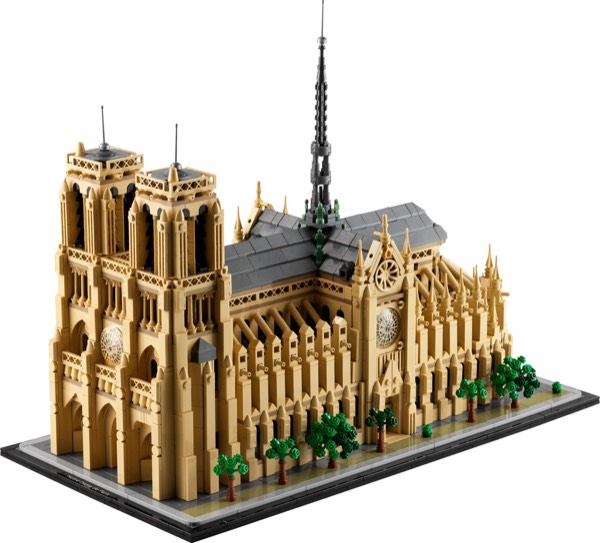
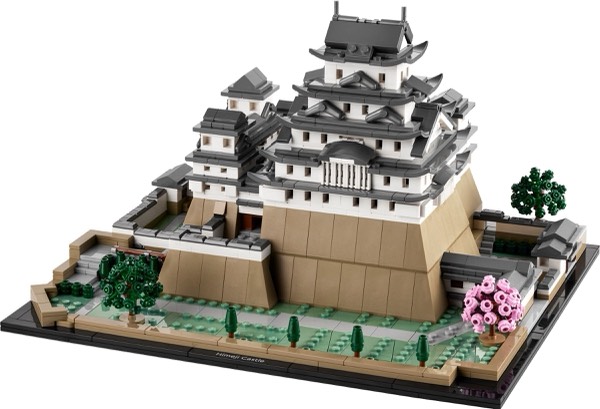
The Architecture line has produced some of LEGO's finest adult sets, from the detailed streetscapes of the Skyline series to the large-scale landmark models like the Himeji Castle and the Notre-Dame de Paris. The Great Pyramid of Giza stands apart from all of them. Where most Architecture sets rely on intricate facades, towers, and rooflines to create visual interest, the Pyramid achieves its impact through sheer geometric simplicity. It is the purest form in the entire collection - four triangular faces meeting at a point - and that purity is what makes it so difficult to execute well in brick.
Compared to the Himeji Castle, which rewards builders with layered rooflines and delicate detailing, the Pyramid rewards patience with scale and precision. Compared to Notre-Dame, which dazzles with Gothic tracery and flying buttresses, the Pyramid impresses with the opposite - the absence of ornament, the discipline of repetition. If your Architecture shelf already holds the ornate European landmarks, the Pyramid provides the perfect counterpoint. It is the anchor piece that grounds a collection in something ancient and elemental.
For collectors building a comprehensive Architecture display, the Great Pyramid fills a geographic and historical gap that no other set in the line addresses. There is no other ancient Egyptian structure in the current catalog. There is no other set from the African continent. And there is no other set that represents a structure over 4,500 years old. It is, in every sense, the foundation stone of a world architecture collection. If you are serious about the Architecture line, this is not optional - it is essential. And with retirement expected in late 2026, the window to add it at retail price is closing. Visit our retiring sets page to stay ahead of the deadline.
- ✓ Highest display presence of any Architecture set
- ✓ Removable cross-section reveals accurate interior
- ✓ Outstanding tan parts haul
- ✓ SNOT technique is a genuine masterclass
- ✓ is excellent Architecture line value
- ✗ Very repetitive build - meditative but not for everyone
- ✗ No landscape base (just the pyramid itself)
Affiliate link. Some products may be provided by the manufacturer. All opinions are my own.
- Best LEGO Architecture Sets Ranked - Our definitive ranking of every Architecture set
- Himeji Castle Review - Another landmark Architecture build
- Notre-Dame de Paris Review - A fellow icon of world architecture in brick
- Retiring Sets Tracker - Know before they go
- Best LEGO Sets by Age (2026) - Age-appropriate picks from toddler to adult
The base assembly is where this set separates itself from other large Architecture builds. Rather than a simple rectangular platform, the internal structure demands genuine understanding of how to distribute lateral stress across diminishing layers. Builders accustomed to straightforward construction suddenly encounter decisions about brick density and foundation integrity that typically belong to MOC design. The manual walks you through it methodically, but the underlying engineering isn't accidental, it's the actual problem the original structure solved in stone.
The sand-colored brick selection also reveals deliberate sourcing decisions that cascade through the entire build. Consistency in tone across thousands of pieces maintains visual authenticity in ways newer colors wouldn't. This became apparent only after comparing final photos to reference material. A builder investing in this set should understand they're getting legitimate materials-choice literacy, not just stacking instructions.
Track it in your vault on GameSetBrick - our free collection app. Log your condition, price paid, and watch the real-time market value.
Track in Your Vault →Save it to your wishlist on GameSetBrick. Share your list with friends and family - every set has a buy button so gift givers know exactly where to go.
Add to Wishlist → GameSetBrick is a free app by The Earl of Bricks. See all features. Scan it. Track it. Trade it.