Is the LEGO FIFA World Cup Official Trophy Worth Buying?
8.9/10. Worth buying. 2,842 pieces of pure gold. LEGO's tribute to the world's most coveted sports trophy.

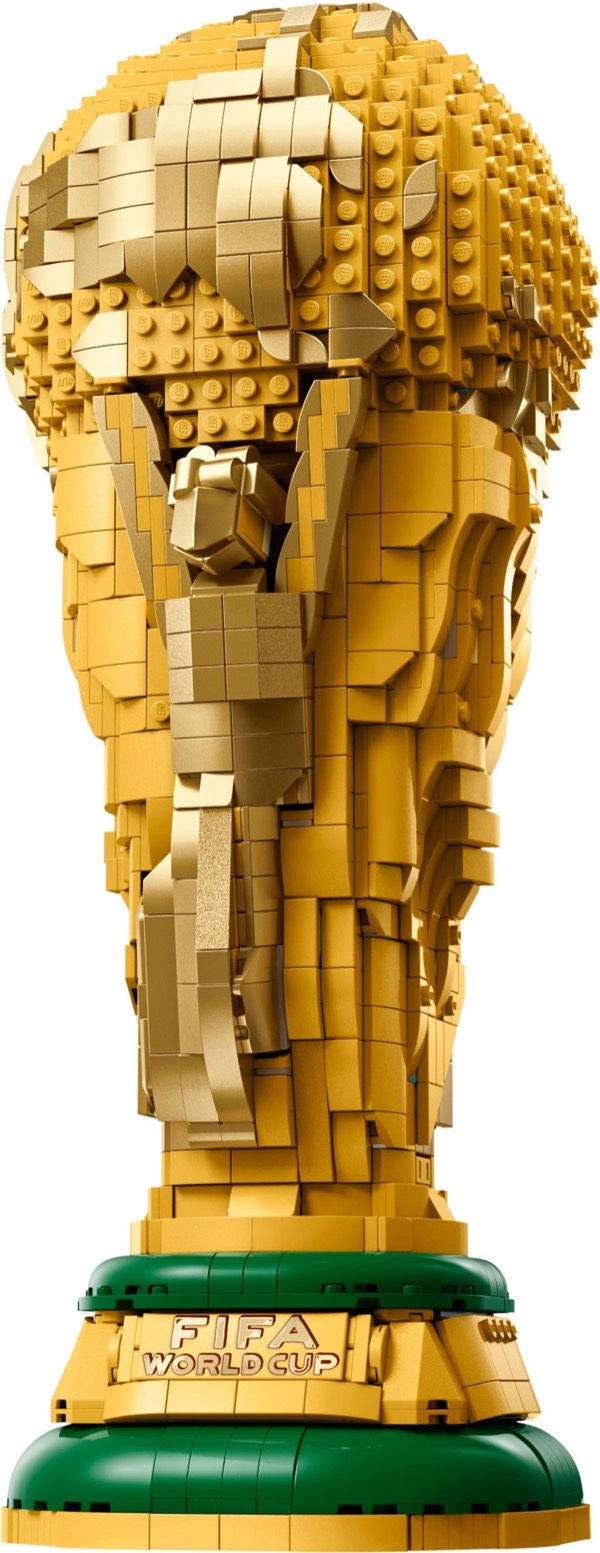
LEGO's decision to release an official FIFA World Cup Trophy set in 2026, the year the tournament returns to North America for the first time since 1994, isn't coincidental. This is a licensed product with real stakes attached. The build sits at a crossroads: it's simultaneously a display piece for casual sports fans AND a serious building challenge that respects the trophy's actual proportions and geometric complexity. At 2,842 pieces, this demands actual attention during construction. The trophy's distinctive malachite base, the swooping curves of the golden wings, the Nike-proportioned figure on top, these aren't simplified. LEGO could've phoned this in as a novelty tie-in. They didn't.
What matters here is that you're getting a set where sports iconography and building difficulty genuinely intersect. This isn't a minifig-heavy licensed product or a branded rebrand of existing techniques. The structural engineering required to hold that cantilevered wing section steady, the precision needed for the base's stepped geometry, these decisions define the build experience. For AFOLs who care about both sports history and construction integrity, this set arrives at an unusually honest place.
At 2,842 pieces, this is a serious multi-session build targeting experienced builders aged 12 and up. LEGO has included a clever builder aid that sets this apart from nearly every other set in the catalog - color-coded marker pieces positioned throughout the base and body that tell you exactly where to place each section without constantly cross-referencing the instruction manual. These markers are temporary scaffolding: bright colored elements that sit at key junction points during construction, guiding you to place the correct sub-assembly in the correct orientation. As you build over them, each marker is removed and replaced by the final gold-colored elements.
The build begins with the solid base - a green and gold platform that establishes the trophy's foundation and the malachite-inspired color scheme of the original. From there, you work through the two human figures in their iconic swirling pose, arms raised to support the globe above them. The figures are the most demanding section of the build, requiring careful attention to the angled brick placements that suggest organic form through purely geometric means. Each figure is built as a separate sub-assembly and then attached to the base, which means you can compare them side by side before installation to verify symmetry.
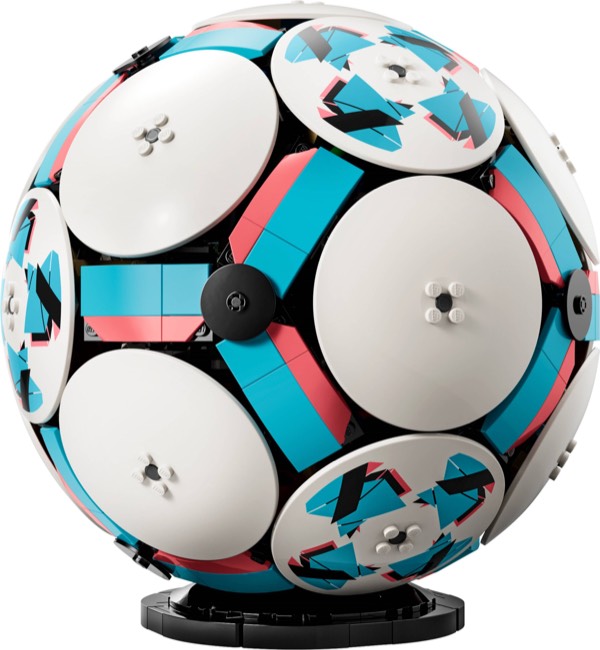
If you are pairing this with the Soccer Ball, build the ball first - the sphere construction provides useful context for the globe technique you will encounter here. The build culminates in the globe at the top - a spherical assembly using curved slopes and printed elements that sits atop the figures' raised hands. The globe construction shares DNA with the Soccer Ball's sphere technique but at a smaller scale, using fewer but more precisely placed curved elements to achieve the illusion. Inside the globe is the hidden compartment - a small chamber that opens to reveal a FIFA 2026 branded minifigure holding a miniature trophy on a printed backdrop. The reveal mechanism is spring-loaded and satisfying. Expect six to eight hours for a focused adult build, more for a weekend-paced approach with breaks.
The Editions theme exists to answer a specific question: what happens when LEGO builds a real-world object at true scale with no compromises on accuracy? The FIFA World Cup Trophy is the most ambitious answer to that question yet. At 2,842 pieces, it is the largest Editions set released to date, and its subject matter - the most recognizable sports trophy on earth - demands a level of sculptural fidelity that most LEGO themes never attempt. The trophy's silhouette is unmistakable: two human figures raising the world above their heads. Getting that silhouette right in LEGO is an engineering challenge that the design team solved with genuine elegance.
What distinguishes Editions from the rest of the LEGO catalog is the tension between the medium and the subject. LEGO bricks are rectangular. The World Cup Trophy is almost entirely curved. Every surface on this model - the flowing human figures, the spherical globe, the tapered base - fights against the inherent geometry of the brick. The design team's solution was to lean into sculptural techniques borrowed from the Art theme, using angled and rotated bricks to suggest organic curvature without relying on flexible or pre-formed elements. The result is a model that looks like a sculpture first and a LEGO set second, which is exactly the Editions thesis.
The hidden compartment feature continues the Editions tradition of rewarding builders with interior discoveries. Like the Soccer Ball's micro-stadium, the trophy's globe compartment adds a layer of interaction that transforms the model from a static display piece into something with a reveal - a secret that the builder knows and can share with visitors. LEGO understands that the best display pieces are the ones that invite conversation, and the hidden 2026 World Cup minifigure provides exactly the kind of surprise moment that turns a shelf ornament into a talking point.
The trophy's two human figures are built in a sculptural style that echoes LEGO's Art series - using angled and rotated bricks to suggest organic shape without using flexible elements. The technique involves offsetting standard bricks at precise angles using hinge plates and clip connections, creating surfaces that read as curved from a distance while remaining structurally rigid. This is the same approach used in the LEGO bust sets, but applied here to full-body figures in a dynamic pose. If you have ever wanted to build human forms in LEGO, these two figures are a masterclass in the technique.
The color-coded marker system is a technique innovation that deserves its own discussion. LEGO has experimented with various build aids over the years - numbered bags, sub-assembly sections, color-coded instruction steps - but the physical marker system in this set is new. Bright-colored elements are placed at structural junction points during early build stages, serving as orientation guides that tell you exactly where the next section attaches. As you build over them, you remove each marker and replace it with the final gold element. It is an elegant solution to the challenge of building a complex sculptural form without getting lost in a sea of same-colored pieces, and it would be welcome in future sets of similar complexity.
The globe at the apex uses curved slopes and printed elements to achieve the spherical illusion convincingly at a scale smaller than the Soccer Ball's sphere. The hidden compartment inside the upper globe is the real technical highlight: it opens via a spring-loaded mechanism to reveal the FIFA 2026 branded minifigure holding a miniature trophy on a printed backdrop. The mechanism is compact - fitting a functional spring release inside a small sphere built from curved slopes - and the engineering required to make it work reliably within such tight tolerances is impressive. The sub-build is small but the reveal feels genuinely crafted, not tacked on as an afterthought.
2,842 pieces in primarily gold, earth green, dark tan, and pearl gold colors - a tremendous haul for anyone building gilded, ornate, or classical-themed MOC subjects. The gold and pearl gold elements are the headline here. Pearl gold is a premium color that appears in LEGO's flagship sets - Hogwarts Castle, the Colosseum, high-end Creator Expert builds - and sourcing it in quantity on the aftermarket is expensive. This set gives you a massive supply of pearl gold bricks, plates, slopes, and tiles in a single purchase, making it one of the most efficient ways to stock up on this color.
The earth green elements from the base section provide a secondary haul that is equally useful. Earth green is a versatile color for landscape, military, and architectural MOCs, and the variety of element types in the base - plates, tiles, curved slopes, decorative trim pieces - gives you a well-rounded selection rather than bulk of a single element. The dark tan elements used in transitional sections between the base and the figures add another useful earth-tone color to the haul.
The dedicated globe elements and the human figure parts are distinctive and reusable for art-style or sculptural builds. The hinge plates and clip connections used to achieve the angled brick placement in the figures are standard elements that find use in virtually any MOC requiring non-orthogonal surfaces. The printed elements - FIFA logos, globe surface details, base plaques - are set-specific and have limited reuse potential, but they represent a small fraction of the total piece count. The overwhelming majority of parts in this set are standard LEGO elements in premium colors, which makes the parts haul genuinely excellent for builders who work in gold, green, or classical palettes.
This is the set's strongest category, and it is not close. The completed trophy stands imposingly on any surface - the gold and green color combination is rich, warm, and immediately eye-catching. The swirling human figures give the model dynamic energy that most LEGO display pieces lack. Where a typical LEGO set sits static on a shelf, the World Cup Trophy feels like it is in motion, the figures straining upward with the globe balanced above them. That sense of movement is extraordinarily difficult to achieve in a brick-built medium, and LEGO nailed it here.
The 1:1 accuracy to the actual FIFA World Cup Trophy is impressive. The silhouette is unmistakable - anyone who has watched a World Cup final will recognize it instantly, even from across a room. The proportions are faithful, the gold color is convincing, and the green base provides the correct visual foundation. LEGO could have simplified the silhouette for easier construction, but the design team committed to accuracy, and the result is a model that stands alongside the real trophy in terms of visual authority. Place it in a glass case with good lighting and it looks like a museum piece.
The hidden minifigure scene can be displayed beside the trophy for added depth, or kept as a surprise for visitors who press the release mechanism. Either way, it adds a dimension to the display that pure-sculpture sets lack. The trophy commands attention on a shelf, a desk, or in a glass case. It works as a standalone centerpiece or as the crown jewel of a football-themed display alongside the Soccer Ball and other sports memorabilia. The display presence of this set is its primary selling point, and it delivers at a level that justifies the price and the shelf space without qualification.
The FIFA World Cup Trophy is for the football fan who wants a display piece that communicates their passion without relying on posters, scarves, or mass-produced memorabilia. This is a handmade tribute to the sport's ultimate prize, built brick by brick over multiple sessions, and the finished product carries the weight of that personal investment. It is also for the LEGO collector who wants a sculptural centerpiece that stands apart from the vehicles, buildings, and helmets that dominate most display shelves.
It is for the gift buyer looking for something meaningful for a World Cup year. With the 2026 FIFA World Cup approaching, this set is perfectly positioned as a commemorative piece that ties a real-world event to a hands-on building experience. The hidden 2026 minifigure inside the globe adds a time-capsule quality that will make this set more meaningful as years pass. Buy it in 2026, build it during the tournament, and it becomes a permanent marker of a specific moment in football history.
It is not for builders on a tight budget who need to maximize parts value per dollar - the licensed premium and the specialized gold elements mean the price-per-piece is higher than unlicensed sets of similar size. It is not for young children - the sculptural build and the emphasis on display over play make this firmly an ages 12 and up experience. And it is not for minimalist collectors who prefer their LEGO to look like LEGO. The World Cup Trophy is designed to look like a trophy first and a LEGO set second, and if that approach does not appeal to you, the execution will not change your mind.
2,842 premium pieces with a significant gold and pearl gold element count, an official FIFA license, and display quality that rivals sets at twice the price point. The build time is substantial and rewarding - six to eight hours of focused construction that teaches sculptural techniques, introduces the color-marker build system, and culminates in a display piece with genuine shelf presence. The value here is not just in the parts count but in the quality of the experience from unboxing to final placement.
The FIFA licensing does add a premium to the retail price, as all licensed LEGO sets carry. Whether that premium is justified depends on how much the FIFA branding matters to you personally. The printed base plaque, the 2026 World Cup minifigure, and the official trophy accuracy all derive from the license. Strip those away and you still have an impressive gold sculptural build, but you lose the emotional connection to the sport that gives the set its meaning for football fans. For the target audience, the license premium is worth paying.
Looking at the secondary market trajectory, licensed sports sets tied to specific events tend to appreciate after the event passes, as remaining sealed stock gets absorbed and nostalgia builds. The 2026 World Cup Trophy is likely to follow this pattern - demand will peak during the tournament and then settle, but long-term value should hold or increase as sealed copies become scarce. Whether you build it or hold it, the financial proposition is sound. But the real value is in the build experience and the display result. A strong buy for the collector, the football fan, or anyone who wants an architecturally significant LEGO centerpiece that earns its shelf space every day.
- ✓ Unmistakable trophy silhouette - gold done right
- ✓ Built-in color marker guide system is genuinely clever
- ✓ Hidden 2026 World Cup minifigure reveal
- ✓ Premium gold parts haul
- ✓ Dynamic figure sculpting in the base
- ✗ FIFA licensing means no names of pre-1974 World Cup winners on the base plaque
- ✗ High-demand set - may sell out near 2026 World Cup
Affiliate link. Some products may be provided by the manufacturer. All opinions are my own.
- Soccer Ball Editions Review - The companion football set
- Best LEGO Art Sets - Display pieces ranked and reviewed
- LEGO Display Ideas - How to showcase trophy builds
- Best LEGO Sets for Adults 2026 - Top picks for grown-up builders
The wing assembly took longer than expected, not because it's tedious, but because LEGO engineered genuine internal bracing instead of relying on shell construction. You're looking at a structure that could survive being picked up by those wings repeatedly, which matters if this display piece shares shelf space with younger hands. The way the golden sections transition into the white accents around the figure's supporting pedestal uses a specific stepping technique that applies pressure distribution rather than pure stacking. Build that section and you understand something about weight management in tall models.
The real surprise sits in parts usage. The set incorporates specific 1x1 round tiles and small cone elements in ways that feel necessary rather than decorative, there's no padding here. That constraint actually improves the build pacing. You're problem-solving throughout the 2,842 pieces rather than executing repetitive sequences. For secondary market investors, this means parts compatibility is limited; you can't just harvest sections for other projects without disrupting this model's structural integrity.
Track it in your vault on GameSetBrick - our free collection app. Log your condition, price paid, and watch the real-time market value.
Track in Your Vault →Save it to your wishlist on GameSetBrick. Share your list with friends and family - every set has a buy button so gift givers know exactly where to go.
Add to Wishlist → GameSetBrick is a free app by The Earl of Bricks. See all features. Scan it. Track it. Trade it.