Is the LEGO Winnie the Pooh Worth Buying?
8.4/10. Worth buying. Oh bother, it is wonderful. 600 pieces bring Pooh Bear's corner of the Hundred Acre Wood to your shelf with charm and warmth to spare.

This set walks a tightrope that most licensed sets don't even attempt. Winnie the Pooh sits in this weird cultural sweet spot, beloved by millennials who grew up with the books and early adaptations, but also claimed by the Disney machine in ways that feel almost sacrilegious to purists. Building 43300, you'll notice immediately that it's working overtime to honor A.A. Milne's Hundred Acre Wood aesthetic rather than lean into the animated saccharine. The color palette is muted. The proportions are oddly gangly. Pooh himself looks less like a plush toy and more like something that could actually exist in the Ashdown Forest. That restraint matters.
What makes this set genuinely worth discussing among serious builders is that it's a character-focused build that doesn't rely on color-bombing or oversized print elements to sell the property. The engineering here is doing real work. Pooh's construction, the jointing, the proportions, the way his head sits, suggests someone at LEGO actually studied the original Shepard illustrations instead of just pulling frames from the 1990s TV series. For anyone who's been waiting for licensed Disney sets to approach source material with actual care, this is the one where it finally happens.
Winnie the Pooh and LEGO share something fundamental: they both believe that simple things can be profound. This set captures that shared philosophy in 600 pieces that build into a scene from the Hundred Acre Wood with more warmth and character than sets twice its size. The build time runs about three hours, and the pacing is gentle and pleasant in a way that matches the source material perfectly. There is no rush here, no complex engineering that demands your full concentration, no moment where the build becomes stressful or confusing. You simply sit down, sort your pieces, and spend a relaxed afternoon building a corner of one of fiction's most beloved settings. That experience is exactly right for a Winnie the Pooh set, and I suspect LEGO designed it that way deliberately.
The construction centers on a tree with Pooh's house built into its base, and the tree-building phase is the most substantial portion of the build. The trunk uses a combination of brown elements with enough texture and color variation to create a convincing old oak, and the hollow interior where Pooh lives is thoughtfully detailed with tiny furnishings that are charming beyond reason. There is a small honey pot, a miniature chair, and other domestic details that you build at a micro scale and place inside the tree through a removable back panel. Building these tiny interior elements is one of the most delightful parts of the entire experience because they are so small and so specific and so perfectly suited to the character. You are building Pooh Bear's actual house, with Pooh Bear's actual honey pot, and that specificity gives the small-scale construction an emotional weight that larger, more impressive builds sometimes lack.
The exterior environment around the tree includes a garden area, a small fence, a mailbox, and various Hundred Acre Wood details that expand the scene beyond the tree itself. These peripheral elements are relatively quick builds that serve as pleasant transitions between the major construction phases. The garden details are colorful and add to the storybook quality of the scene, with flowers, a vegetable patch, and small environmental touches that suggest a cozy, well-tended corner of the woods. The overall construction experience is one of steadily accumulating charm, where each completed section adds another layer of warmth to the display until the whole thing radiates the kind of gentle contentment that defines Winnie the Pooh as a character and a franchise.
What impresses me most about the build experience is how LEGO has matched the construction complexity to the emotional register of the source material. A Winnie the Pooh set should not be stressful or overly demanding. It should be comfortable and enjoyable and slightly nostalgic, and that is precisely what building this set feels like. The designers understood the assignment, and they delivered a build experience that honors the character by embodying his philosophy: sometimes the most important thing is to simply enjoy what you are doing while you are doing it.
The tree construction is the primary technique to study here, and it offers a approachable lesson in building organic forms at a moderate scale. The trunk uses a combination of standard brown bricks and specialized curved elements to create a shape that is round without being perfectly cylindrical. The irregular profile, wider at the base and narrowing toward the branches, is achieved through careful stepping of brick sizes that creates a tapered silhouette. This tapering technique is fundamental to any organic building project, from trees to rock formations to creature bodies, and seeing it executed cleanly at this scale provides a template that builders can adapt to their own projects.
The interior room built inside the tree trunk teaches a valuable lesson about creating functional spaces within organic shells. The removable back panel that provides access to the interior is connected via simple hinge elements, and the interior walls are built independently from the exterior bark texture. This separation of interior finish from exterior texture is a technique that applies to any building project where you want different surface qualities on the inside versus the outside of a structure. Castle towers, spaceship hulls, and fantasy dwellings all benefit from this dual-layer approach, and the Winnie the Pooh tree demonstrates it in a compact, easy-to-understand context.
The canopy construction uses a leaf cluster approach similar to other tree sets in the LEGO catalog, with individual foliage sections built on small plates and attached to branch arms. The technique here is standard but executed with attention to color distribution that is worth noting. The leaf clusters use two or three shades of green with the variation distributed to suggest dappled sunlight and shadow, and this principle of using color variation within a single surface to create visual depth is one that applies broadly. The small accessories, including the honey pots, the garden elements, and the various Hundred Acre Wood details, demonstrate micro-scale building techniques that are useful for anyone working on dioramas, dollhouses, or detailed interior scenes at minifigure scale.
The fence and garden construction teaches efficient terrain building at a small scale. The techniques here are not complex individually, but the way they combine to create a convincing outdoor scene within a limited footprint demonstrates the art of scene composition, knowing what to include, what to suggest, and what to leave to the viewer's imagination. That editorial skill is as important as any specific building technique, and this set teaches it through example.
The 600-piece haul is focused and practical, with a palette centered on warm browns, greens, and the distinctive yellow that defines Pooh Bear himself. The brown elements span the tree trunk and garden structures, providing a useful assortment of standard bricks, curved elements, and textured pieces in sizes that are commonly needed for organic and architectural building. The green elements from the canopy and garden are similarly useful, covering multiple shades that work well in any natural scene.
The smaller elements, including the micro-scale interior furnishings, garden accessories, and various detail pieces, offer surprisingly broad utility despite their small size. Tiny pots, plates, tiles, and printed elements from the Hundred Acre Wood details are the kind of pieces that MOC builders often need in small quantities for finishing touches, and getting a selection of them as part of a larger set is more convenient than sourcing them individually from the secondary market. The yellow elements associated with Pooh's character are less universally useful but valuable for anyone building in warm tones or constructing other character figures at this scale.
The structural elements, including the hinge pieces for the removable back panel and the Technic elements that provide internal support for the tree, are standard utility parts that see use across every building discipline. Overall, this is a parts haul that serves its primary purpose well and offers enough general utility to maintain value beyond the specific set. The warm color palette makes it particularly useful as a supplement for builders who work primarily in natural and domestic themes where browns, greens, and warm accent colors dominate. It is not the most exciting parts haul in the LEGO catalog, but it is honest and useful, which is rather fitting for a Winnie the Pooh set.
The Winnie the Pooh set displays with the kind of gentle charm that makes people stop and smile. It does not command attention like a massive Star Wars set or impress with engineering like a Technic supercar. Instead, it sits quietly on your shelf and radiates warmth, and every time you notice it, you feel just slightly happier than you did a moment before. That is an unusual quality for a LEGO set to have, and it comes directly from the source material. Winnie the Pooh is comforting in a way that few fictional characters manage to be, and this set translates that comfort into physical form with remarkable success.
The tree is the visual anchor, standing tall enough to be the clear focal point while the surrounding garden and accessories create a scene that invites close inspection. The removable back panel means you can display the set with the interior visible, showing Pooh's tiny home in cross-section, or with the back closed for a complete exterior view. This dual display option adds value because it gives you two different presentations from a single set, and both are effective. The exterior view is a charming woodland scene. The interior view adds a narrative layer that tells the story of a small bear who lives in a tree and loves honey, and both versions bring genuine pleasure to anyone who sees them.
The color palette is warm and inviting, dominated by the golden browns of the tree, the soft greens of the foliage, and the bright yellow of Pooh's iconic shirt. These colors work together to create a display that feels like a storybook illustration translated into three dimensions, which is exactly the aesthetic this set should achieve. The storybook quality is enhanced by the slightly exaggerated proportions and the carefully chosen details that reference the classic E.H. Shepard illustrations rather than the more modern Disney animation style. That choice gives the set a timeless quality that will not date as animation styles evolve.
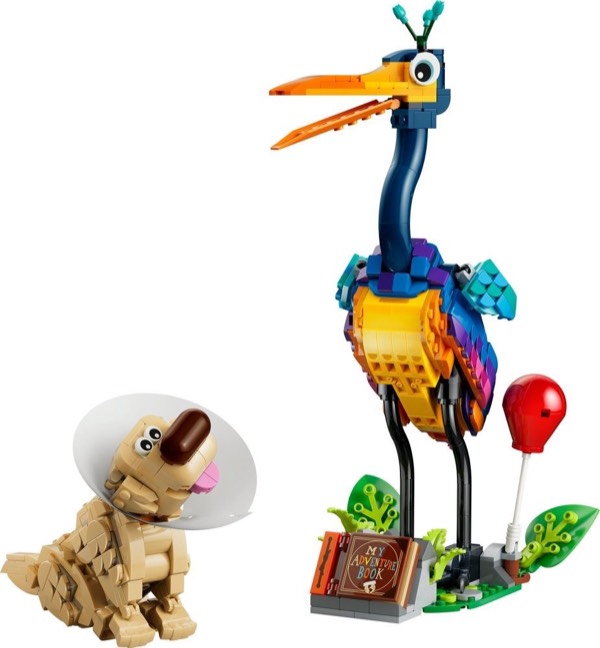
As a gift, this set is nearly perfect. It appeals to Disney fans, Winnie the Pooh enthusiasts, LEGO builders, and people who simply appreciate charming decorative objects. The display footprint is manageable, fitting comfortably on a bookshelf or desk without requiring dedicated display space, and the visual warmth it brings to a room is disproportionate to its size. Few sets in the current LEGO catalog deliver this much emotional impact per square inch of shelf space. For another Disney character build with similar charm, the Kevin and Dug set captures the same spirit of joy in a very different colour palette.
The set includes Winnie the Pooh and likely one or more of his friends from the Hundred Acre Wood, and these figures are the heart of the set's character appeal. Pooh himself is rendered with the distinctive round belly, the red shirt, and the gentle expression that defines the character, and the figure quality is consistent with LEGO's best Disney work. The proportions may use a slightly modified minifigure format to capture Pooh's distinctive body shape, which would be a thoughtful touch that shows LEGO's willingness to adapt their standard figure format when a character's silhouette demands it.
Any accompanying characters, whether Piglet, Tigger, Eeyore, or others, add display variety and scene-staging possibilities that enhance the set's value as a narrative display piece. The Hundred Acre Wood friends are among the most recognizable and beloved character ensembles in all of fiction, and each figure included in this set provides both standalone display value and the opportunity to create vignettes that reference specific stories from the books and animated features. For collectors, these figures represent a specific LEGO interpretation of classic Disney characters, and that interpretive quality gives them value beyond their physical construction. These are not generic figures. They are specific characters with specific emotional associations, and owning them in LEGO form connects the builder's hobby to a broader cultural legacy of storytelling and childhood memory.
At approximately retail price for 600 pieces, the Winnie the Pooh set carries the Disney license premium that is standard across LEGO's Disney partnership. The price per piece is higher than unlicensed sets of similar size, which is a legitimate consideration for buyers who prioritize parts value over display and emotional impact. However, the value calculation for this set should include factors beyond pure piece count. The display quality is exceptional for its size, the build experience is perfectly calibrated to its source material, and the emotional resonance of the Winnie the Pooh theme adds a dimension of value that spreadsheets cannot capture.
For Disney fans and Winnie the Pooh collectors, the set offers fair value at this price point. The alternative methods of obtaining a high-quality Pooh display piece, custom commissions, imported collectibles, limited-edition figurines, generally cost more and deliver less building enjoyment. For LEGO builders without a specific connection to the franchise, the value depends on how much you weight the charming display quality and warm aesthetic against the relatively modest piece count. My honest assessment is that the set delivers enough quality, charm, and building satisfaction to justify its price for anyone who responds to its specific appeal. If Winnie the Pooh means something to you, this set is worth every penny. If it does not, there are larger and more technically ambitious sets available for the same money.
- ✓ Overflowing with warmth and storybook charm
- ✓ Build experience perfectly matches the gentle Pooh aesthetic
- ✓ Detailed tree interior adds narrative depth
- ✓ Dual display options with removable back panel
- ✓ Exceptional gift appeal across age groups
- ✓ Timeless design that references classic illustrations
- ✓ Compact footprint with outsized emotional impact
- ✗ Disney premium impacts price-per-piece value
- ✗ Limited appeal for builders without Pooh connection
- ✗ Modest scale compared to other sets at this price
Some products may be provided by manufacturers. This page contains affiliate links. All opinions are my own.
- Kevin and Dug (Up) Review - Another Disney/Pixar character build
- Bonsai Tree Review - A tree build with similar charm
- Sherlock Holmes Book Nook Review - Another literary character display
- Best LEGO Sets for Kids by Age 2026 - Family-friendly sets by age range
Forget the assumption that this is a gift set for young kids. The 600-piece count and the build complexity target experienced builders who happened to grow up reading the books or who appreciate licensed sets that don't insult their intelligence. The secondary market data backs this, these are selling higher in collector circles than typical Disney releases at the same price point. If you're someone who owns Botanical Collection sets and MOC architectural builds, this occupies a similar emotional space: it's about restraint, accuracy to source material, and the confidence to make a licensed product that doesn't need bright trans-red elements to feel exciting.
The minifigure count is deliberately lean, just Pooh, Piglet, and Eeyore as micro-builds, which tells you everything about the design philosophy. This isn't a property pack. It's an environment. The real draw is Pooh's house, the bridge, and the surrounding woodland details. Builders who geek out over architectural accuracy and small-scale landscaping will find more to sink their teeth into here than builders chasing full character rosters.
Track it in your vault on GameSetBrick - our free collection app. Log your condition, price paid, and watch the real-time market value.
Track in Your Vault →Save it to your wishlist on GameSetBrick. Share your list with friends and family - every set has a buy button so gift givers know exactly where to go.
Add to Wishlist → GameSetBrick is a free app by The Earl of Bricks. See all features. Scan it. Track it. Trade it.