Is the LEGO Diagon Alley Wizarding Shops Worth Buying?
9.2/10. Worth buying. Twelve minifigures, three legendary shops, and the most immersive Wizarding World streetscape LEGO has ever created.
Comparing your options? See where it lands in our best Harry Potter display sets.

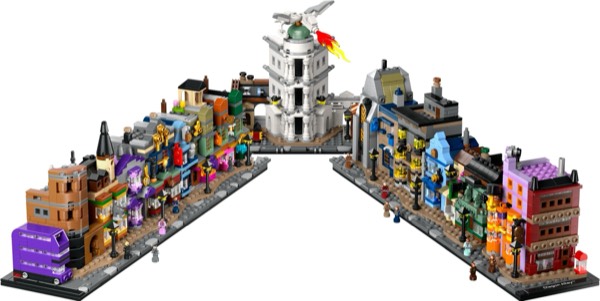
Diagon Alley 76444 arrives in 2025 as the highest-stakes Harry Potter set LEGO has released since the 2018 version, and it's a completely different animal. Where the original played it safe with modular storefronts and safe color palettes, this rebuild burns the playbook. Three shops (Ollivanders, Flourish & Blotts, Gringotts) share a single, interconnected streetscape that demands you commit to display architecture rather than individual buildings. The build footprint is substantial. The part count is real. This isn't a set for casual HP fans collecting one piece of the universe, it's for builders who understand that streetscapes are harder to execute than standalone structures, and who are willing to invest serious build time for immersion over modular flexibility.
The twelve minifigures seal the equation. This density of character selection signals LEGO's pivot toward licensing sets as complete narrative experiences rather than vehicles for specific characters. You're getting Dumbledore, Voldemort, the Weasleys, and deep cuts alongside obvious choices. That design philosophy, stuffing narrative weight into a single release rather than spreading content across multiple sets, is what separates this from the safer playbook LEGO usually follows. It's ambitious, and it works.
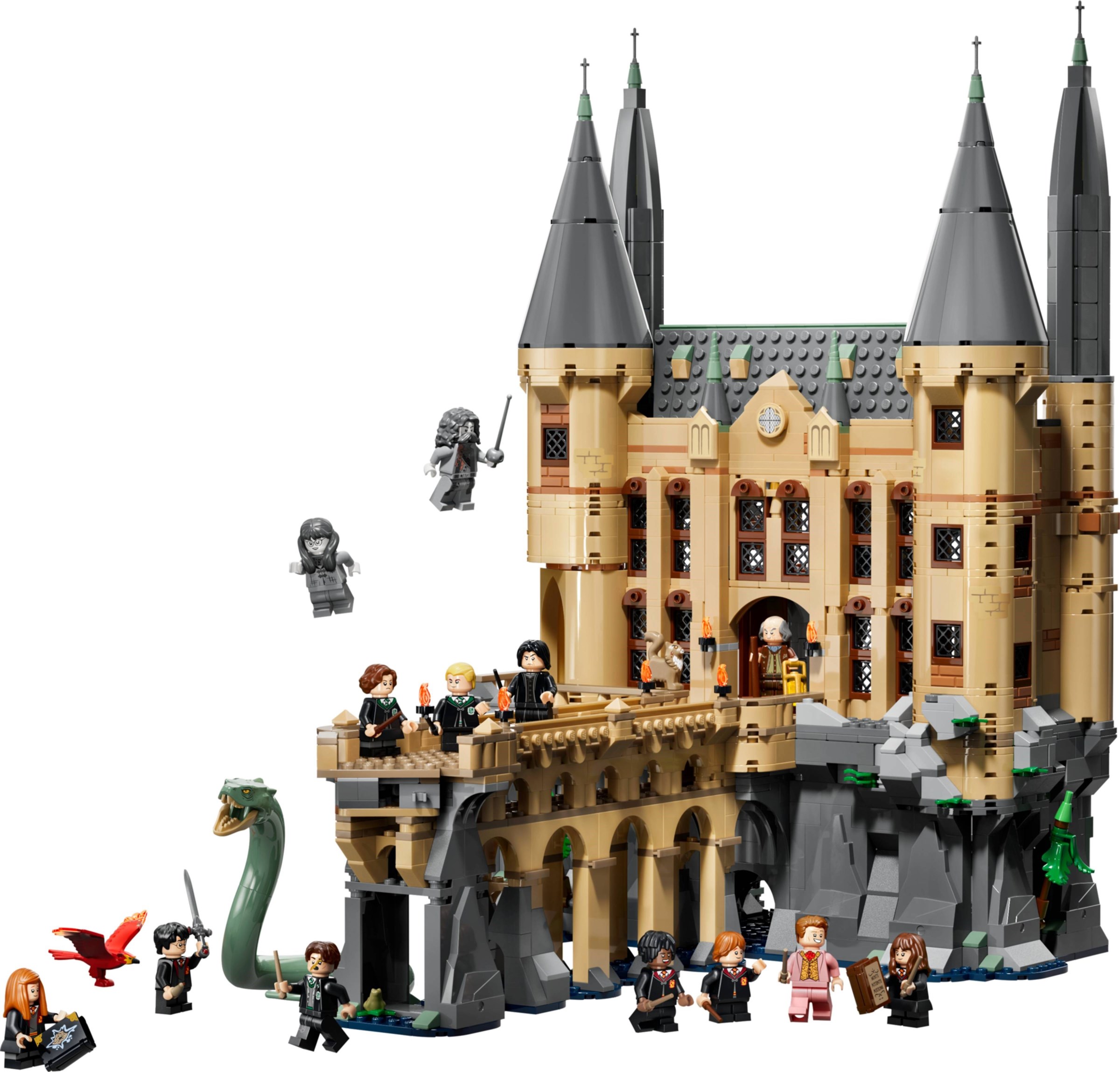
Twelve minifigures is a staggering haul for a single set, and LEGO has chosen the lineup wisely. Harry, Hermione, and Ron anchor the collection in their Hogwarts robes, and each one features dual-sided head printing with expressive alternate faces. The supporting cast stretches across the full Diagon Alley experience - you get Hagrid with his oversized figure mould and signature pink umbrella, Mr. Ollivander with a wand and spectacle printing, a Gringotts goblin teller with detailed waistcoat torso print, and a hooded figure browsing Knockturn Alley who adds a subtle note of menace to the display.
The remaining figures fill out the street scene beautifully. A Daily Prophet vendor, a Leaky Cauldron barkeep, a Flourish and Blotts shopkeeper, and two additional Hogwarts students give you enough characters to populate every storefront with life. The printing quality across the board is excellent - LEGO has clearly invested in making each figure feel distinct and screen-accurate. Several figures include alternate hair or hat pieces, and the accessory count is generous: wands, potion bottles, books, a cauldron, owl, and stacks of Galleon coins. If you collect Harry Potter minifigures, this single box will fill more gaps than any other set currently available.
Diagon Alley unfolds across 2,750 pieces in a build sequence that mirrors the experience of walking down the crooked cobblestone street for the first time. LEGO has divided the construction into three distinct buildings - Ollivanders Wand Shop, Gringotts Wizarding Bank, and the Leaky Cauldron - each packaged in its own set of numbered bags. The result is a build that never drags, because every hour or so you complete a fully realized structure and move on to the next. The pacing is genuinely excellent, rivalling the best modular building experiences LEGO has produced.
Each building presents its own construction personality. The Leaky Cauldron is the warmest and most inviting build, with brick-built barrel elements, a fireplace with Floo powder details, and a cozy pub interior that takes shape quickly. Ollivanders demands more patience - stacking hundreds of tiny wand boxes along the walls is repetitive but satisfying in its final effect. Gringotts is the showpiece, with its imposing marble columns and a tilted facade that uses angled plate techniques to create that signature leaning architecture from the films. By the time you connect all three buildings and step back, you have a street scene that is instantly recognizable.
The 18+ age recommendation is appropriate. While no single technique here is exceptionally difficult, the sheer scale and the number of small detail elements make this a build that rewards attention and patience. Expect eight to ten hours of focused building time, which for a set at this price point feels like genuine value. This build experience stands alongside sets like the Hogwarts Main Tower and Hogsmeade Village as one of the best the Harry Potter theme has ever delivered.
The architectural variety across three distinct buildings gives LEGO's designers room to show off, and they have taken full advantage. Gringotts is the technical centrepiece - the leaning facade uses a combination of hinge plates and angle connectors to create a structure that appears to defy gravity while remaining structurally sound. The marble effect on the bank's interior columns is achieved through alternating white, light grey, and pearl gold elements that create a convincing stone texture without relying on printed pieces. The vaulted ceiling in the main hall uses an arch technique borrowed from the Architecture line that produces a genuinely impressive overhead curve.
Ollivanders showcases a different kind of technical achievement - density. The towering shelves of wand boxes are built using a grid of 1x2 tiles in varying shades of brown and tan, creating that iconic floor-to-ceiling chaos that defines the shop in the films. The technique is simple in isolation but the cumulative effect is remarkable. Each box is individually placed rather than printed onto a larger panel, which means the texture has genuine three-dimensional depth when viewed from the side. The Leaky Cauldron leans on SNOT techniques to create the rough plaster and timber-frame exterior that distinguishes wizarding pub architecture from the grander buildings on either side.
Smaller technical details elevate the whole set. The cobblestone street base uses textured plates and round tiles in dark grey to create an uneven walking surface. The shop signs are brick-built rather than stickered, with Ollivanders' wand-and-cushion logo constructed from small plates and a gold bar element. The Gringotts dragon - visible perched atop the bank in the final display - is a compact brick-built creature that uses ball joints for poseable wings. These details reward close inspection and demonstrate that the design team cared about getting the Wizarding World atmosphere right at every scale.
At 2,750 pieces, the raw parts count is impressive, but the real value lies in the variety. Unlike castle-themed sets that lean heavily on dark grey, Diagon Alley draws from a broad colour palette - warm browns and tans for the Leaky Cauldron timber framing, whites and golds for Gringotts' marble interior, and deep purples and greens for the shop awnings. MOC builders will find useful quantities of architectural elements: window frames in multiple sizes, arch pieces, textured wall panels, and a generous supply of 1x2 tiles in at least eight different colours.
The twelve minifigures represent significant parts value on their own. Several feature exclusive torso prints that are not available in any other set, and the Gringotts goblin with its detailed banking uniform is likely to become a sought-after figure on the secondary market. Beyond the figures, the accessory inventory is one of the deepest in any Harry Potter set - wands in multiple colours, potion bottles, books with printed covers, a brick-built owl in a cage, Galleon coins, and the Sorting Hat element. The golden Gringotts key and the tiny Philosopher's Stone element are particularly nice touches that collectors will appreciate.
For builders who plan to use these parts in original creations, the street base plates and modular connection points add practical value. The cobblestone sections can be repurposed for any medieval or fantasy streetscape, and the timber-frame wall sections from the Leaky Cauldron are essentially ready-made facades for custom tavern builds. If you are already building a Wizarding World layout that includes the Malfoy Manor, these parts will integrate seamlessly into a larger display.
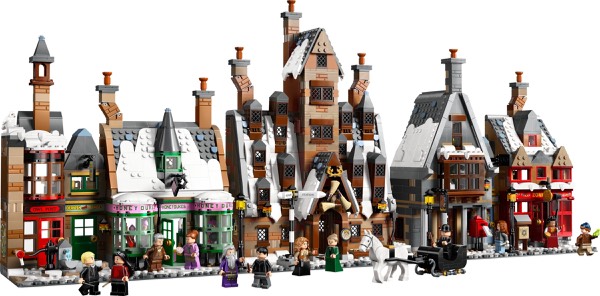
This is the category where Diagon Alley genuinely excels, and a 9.4 score barely captures how good this set looks on a shelf. The finished model stretches over 50 centimetres wide, creating a streetscape panorama that reads instantly as the Wizarding World's most famous shopping district. Each building has a distinct architectural personality - the crooked, cluttered charm of Ollivanders, the imposing classical grandeur of Gringotts, and the warm, lived-in feel of the Leaky Cauldron. Together they create the visual variety that makes real streets interesting, and the slight differences in building height and roofline add an organic, unplanned quality that feels authentically magical.
The interiors are equally impressive when viewed through the open backs. Ollivanders' wall of wand boxes is a visual showstopper - the sheer density of individually placed boxes creates a texture that draws the eye and invites close inspection. Gringotts' marble hall with its chandelier element and teller windows feels grand even at minifigure scale. The Leaky Cauldron's pub interior with its fireplace, barrel-lined walls, and tiny food elements on the tables is the kind of cozy scene that makes you want to shrink down and pull up a chair. Populate these spaces with the twelve included minifigures and you have a display that tells a dozen stories simultaneously.
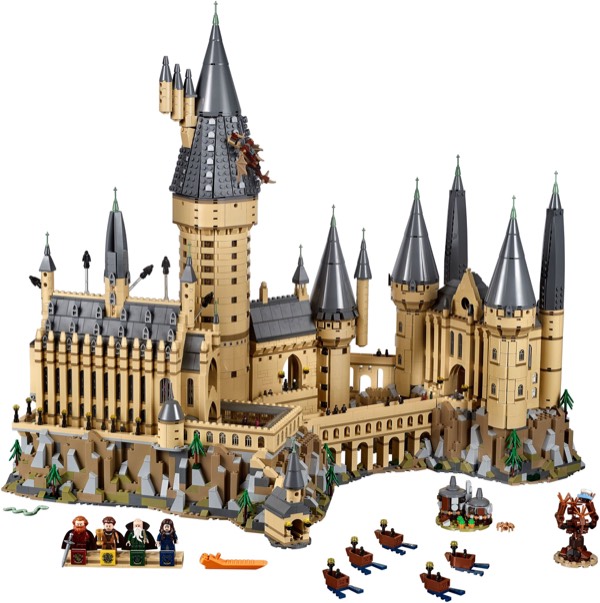
For collectors building a larger Harry Potter display, Diagon Alley is the crown jewel. It pairs naturally with the Hogwarts Main Tower as the two essential landmarks of the Wizarding World. Add Hogsmeade Village and you have a three-location display that captures the full scope of Harry's world. The set's wide, shallow profile also makes it practical for standard bookshelves and display cases - a thoughtful design choice that many large LEGO sets overlook. For more display inspiration, check out our guide to the best Harry Potter display sets.
For 2,750 pieces and twelve minifigures, Diagon Alley sits at roughly seven cents per piece - competitive for a licensed 18+ set and genuinely strong when you factor in the minifigure count. Twelve figures with this level of print detail would cost significantly more if purchased individually on the secondary market, and several of them are exclusive to this set. The sheer volume of building time - expect a full weekend of focused construction - adds further value for builders who measure their investment in hours of enjoyment as well as piece count.
The display value per dollar is where this set truly justifies its price. You are getting three complete, detailed buildings that create a cohesive streetscape display over 50 centimetres wide. Compare that to a single modular building at a similar price point and Diagon Alley delivers more visual impact, more variety, and more play potential. The set also holds strong secondary market value - Diagon Alley sets have historically been among the best-performing Harry Potter investments, and this version's combination of scale, minifigure count, and architectural detail suggests it will follow that pattern. If you are looking for one Harry Potter set that delivers the most complete Wizarding World experience, this is the one. For more adult-focused LEGO recommendations, see our roundup of the best LEGO sets for adults in 2026.
- ✓ Twelve minifigures with excellent print quality and exclusive designs
- ✓ Three distinct buildings create a stunning 50cm streetscape display
- ✓ Gringotts tilted facade uses clever angled plate construction
- ✓ Ollivanders wand box wall is a visual masterpiece of texture and density
- ✓ Broad colour palette makes parts useful for diverse MOC projects
- ✓ Generous accessory count including wands, potions, books, and Galleon coins
- ✓ Excellent build pacing across three separate construction sequences
- ✓ Strong secondary market potential for the complete set and individual figures
- ✗ Placing wand boxes in Ollivanders becomes repetitive during the build
- ✗ Gringotts vault interior feels underdeveloped compared to the grand main hall
- ✗ No Weasleys' Wizard Wheezes - a notable omission from the Diagon Alley lineup
- ✗ Licensed theme pricing means the retail price is a significant investment
Some products may be provided by manufacturers. This page contains affiliate links.
- Hogwarts Castle: The Main Tower - The minifig-scale Hogwarts centrepiece
- Hogsmeade Village Review - Expand your Wizarding World display
- Malfoy Manor Review - The dark side of the Wizarding World
- Best Harry Potter Display Sets - Every HP display set ranked
- Best LEGO Sets for Adults 2026 - Top picks for grown-up builders
The street-level detail work here rivals anything in the Architecture line, except it's functional. Cobblestone paving isn't just printed, it's built with slope variation and micro-transitions that force you to understand vertical stacking as a design tool rather than decoration. The window treatments across all three shops use different techniques (recessed frames, layered panes, lighting integration points) in ways that don't repeat. Most builders won't notice they're learning structural problem-solving while building what looks like a straightforward recreation.
Parts-wise, the gray slope element allocation is heavy enough to create genuinely functional MOC opportunities once you've displayed the stock build. The variety of dark-brown and tan elements provides rare ammunition for period-authentic European architecture. Dark tan in particular, a color LEGO rations across most sets, appears in quantities that make custom streetscape extensions actually buildable without raiding multiple secondary-market purchases. That material generosity is the invisible design choice that elevates this beyond display-only territory.
Track it in your vault on GameSetBrick - our free collection app. Log your condition, price paid, and watch the real-time market value.
Track in Your Vault →Save it to your wishlist on GameSetBrick. Share your list with friends and family - every set has a buy button so gift givers know exactly where to go.
Add to Wishlist → GameSetBrick is a free app by The Earl of Bricks. See all features. Scan it. Track it. Trade it.