Is the LetBricks Medieval Dark Fortress Worth Buying?
9.0/10. Worth buying. 17,693 pieces of dark fantasy towering over five feet tall - the fortress that shadows everything else in your collection.
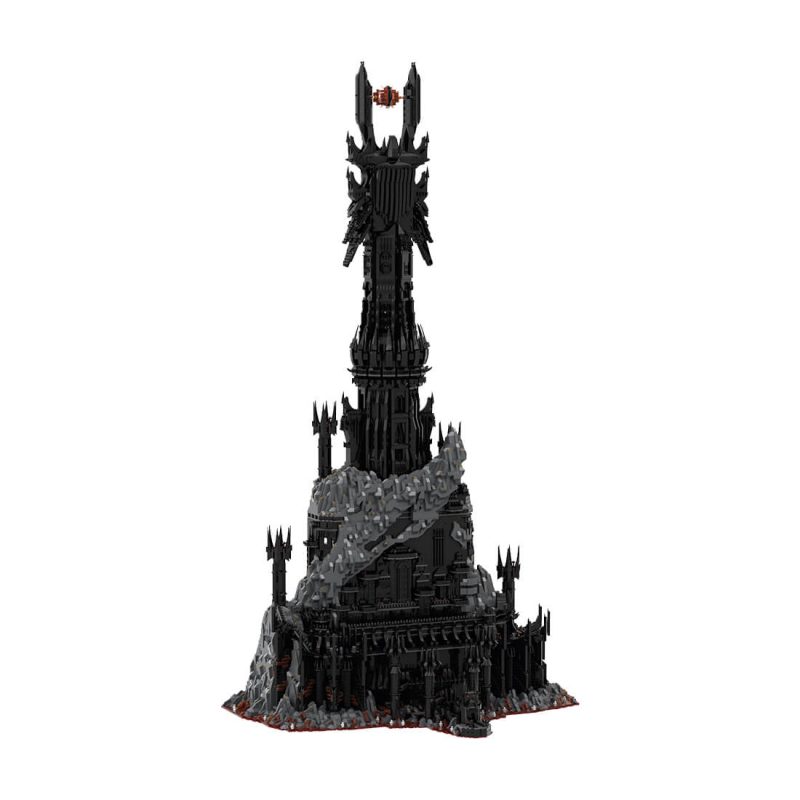
LetBricks builds fortresses that don't apologize. This one, 17,693 pieces of charcoal, dark tan, and obsidian black, sits on my layout like it's actively suppressing everything around it. Over five feet of vertical real estate, and the color palette refuses to play nice with standard castle MOCs. That's the first thing to understand: this isn't a display piece that complements your existing medieval collection. It's a statement that demands reorganization, new context, and a fresh approach to how you think about large-scale fortress construction.
After completing this build across multiple sessions, what strikes hardest is the engineering underneath. LetBricks didn't pad the piece count with decorative noise, the sheer volume comes from genuine structural complexity. The hollow sections are minimal, wall integrity matters throughout, and the interior logistics actually work rather than serving as empty theater. For builders who've wrestled with bricklink-sourced MOCs that look impressive but bend under their own geometry, this is different. The design respects gravity and leverage in ways that separate it from typical commercial releases.
The Medieval Dark Fortress is not a weekend project - it is a commitment. At 17,693 pieces and nearly 20 kilograms of brick, you are looking at weeks of sustained building across six modular components that each function as a significant set in their own right. The modular approach is essential here because the finished model stands 163cm tall, which means you cannot realistically build it in place; each section is constructed independently and then stacked or connected during final assembly. The pacing within each module is surprisingly well-managed for a third-party MOC of this scale. You move from dungeon interiors to armory walls to the soaring dome structure with enough variety to keep the build fresh across dozens of sessions. The instruction quality is serviceable and clear enough to follow, though some steps require careful attention given the density of interlocking structural techniques at this scale.
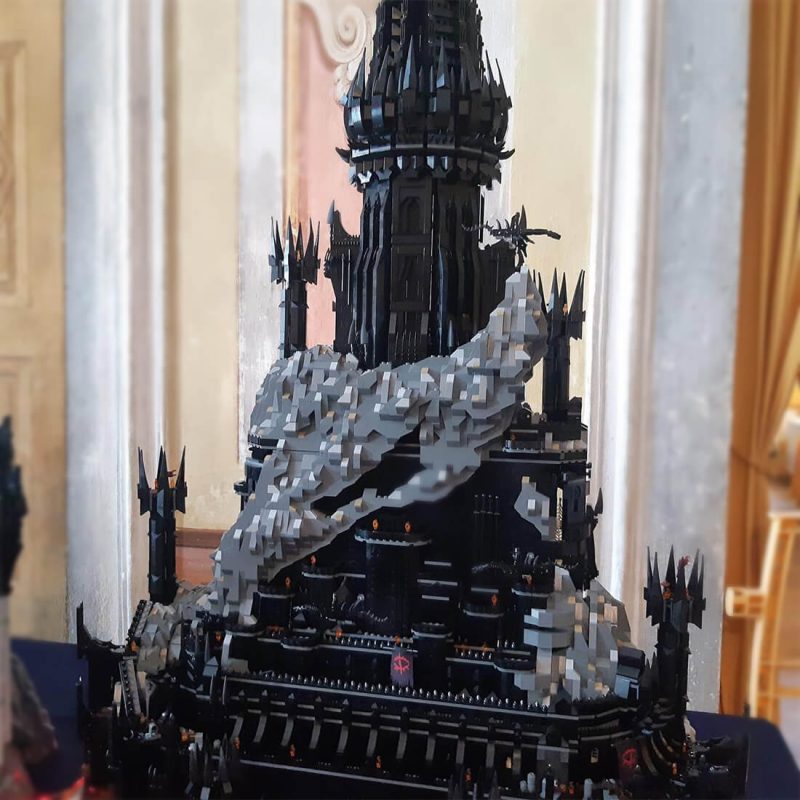
The journey through the six modules tells a story from the ground up. The first module is the dungeon and foundation level, where dark stone corridors and prison cells establish a grim, atmospheric tone that carries through the entire build. Working through the tiny barred windows, the manacles on the walls, and the dank furnace room, you start to understand that this is not just a tower - it is a world being assembled vertically. The second and third modules introduce the armory and living quarters, with noticeably more refined brick work as the fictional inhabitants climb the social ladder. By the time you reach the library level, with its individual book elements on shelved walls and reading alcoves, the character of the build has shifted from oppressive to scholarly. The throne room module marks the transition to power and grandeur, with wider interior spaces and more ornamental detail work. And the dome with its eye element at the summit is the payoff - a technically demanding, visually striking capstone that makes every hour spent on the lower levels worthwhile.
The final assembly - stacking the completed modules and securing them to each other - is both the most nerve-wracking and the most satisfying phase of the entire project. Each module weighs several kilograms on its own, so aligning the connection points and lowering sections into place requires steady hands and ideally a second pair. When the last module seats and the fortress stands at its full 163cm height for the first time, the scale of what you have built hits you in a way that no photograph or specification can prepare you for. It is a moment that justifies the entire investment of time and effort.
This is where the Medieval Dark Fortress genuinely earns its reputation. Designer LegoMocLoc has engineered a structure that uses advanced SNOT techniques, Technic-reinforced load-bearing walls, and clever geometry to achieve a tapered cylindrical tower form that would be nearly impossible with basic stacking. The interior rooms - throne room, library, armory, prison, furnace, and the ring chamber - each employ distinct building techniques suited to their theme, from arched doorways and vaulted ceilings to functional-looking torture machinery and bookshelves with individual volumes. The upper dome structure with its eye element is an engineering showcase, requiring precise angle work to achieve the curved surfaces at that scale. The modular connection system between the six major sections is robust enough to support nearly 20 kilograms of assembled brick, which is no small feat of structural engineering. If you want to learn advanced MOC techniques, building this fortress is a masterclass.
The load-bearing engineering deserves particular scrutiny because it is the invisible backbone that makes everything else possible. At 163cm tall and nearly 20kg assembled, the fortress generates significant compressive forces at the lower levels. LegoMocLoc addresses this with a Technic beam skeleton that runs vertically through the core of each module, transferring weight downward through rigid connection points rather than relying on standard brick-on-brick clutch power alone. The walls use a double-thickness construction where the outer decorative layer is locked to an inner structural layer through periodic SNOT connections, creating a sandwich structure that resists lateral forces. Without this engineering, the tower would bow under its own weight. With it, the structure stands stable and vertical with no visible flex. Builders who study this framework will learn principles that apply to any large-scale vertical MOC - how to calculate where reinforcement is needed, how to distribute loads across connection points, and how to design modular joints that bear weight while remaining disassemblable.
The individual room techniques are equally instructive but in a very different register. The library module uses a micro-scale bookshelf technique where 1x1 tiles in varying browns and dark reds are stacked vertically between column elements to create the impression of hundreds of individual volumes on shelves. The throne room employs a raised floor technique with gold-tone accents that creates a sense of elevation and grandeur within the cylindrical constraints. The prison level uses black and dark grey bar elements in a cage construction that locks into the curved wall at multiple anchor points, creating cells that follow the tower's circumference. Each room is essentially a tutorial in themed interior design within a cylindrical space, and the variety of approaches demonstrates a designer who has mastered the challenge of making round rooms feel inhabited and purposeful.
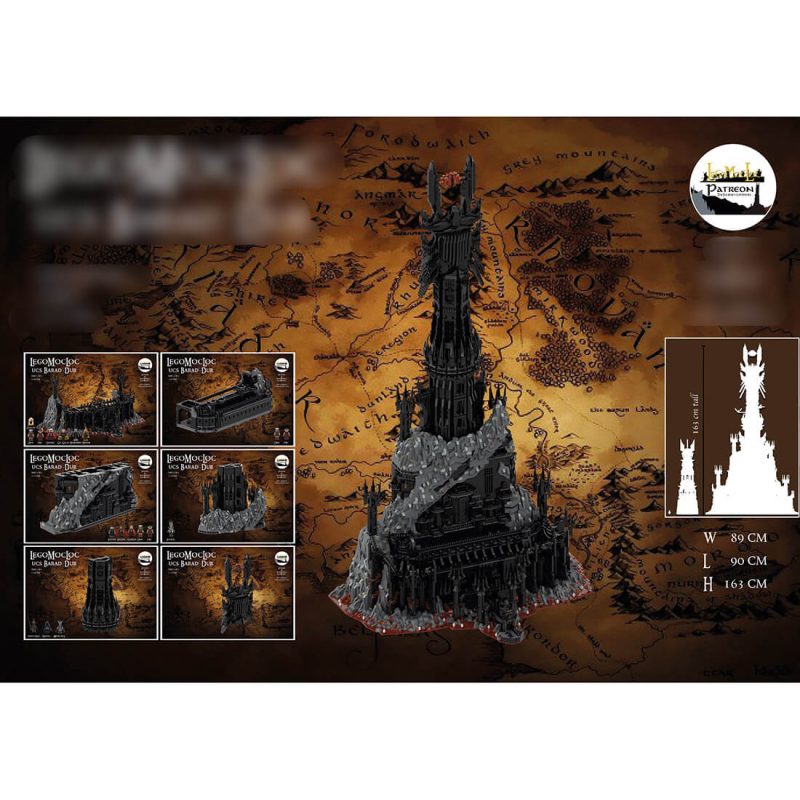
17,693 pieces is an enormous parts haul by any standard. The color palette leans heavily into dark grays, black, dark brown, and dark red - exactly what you would want for a gothic fortress or any dark-themed MOC. There is a substantial quantity of Technic beams and connectors used in the structural reinforcement, which adds utility for future engineering projects. The variety of architectural elements - arches, columns, window frames, and decorative pieces - is excellent for anyone who builds medieval or castle-themed MOCs. You also get a healthy spread of tile pieces for the detailed interior floors and walls. The sheer volume means that even after the build, you have a meaningful inventory of dark-palette bricks that would cost a small fortune to source individually on BrickLink. The weight alone - 19.8 kilograms - tells you what kind of brick density you are dealing with here.
The breakdown by element type reveals just how comprehensive this inventory is. You are looking at hundreds of standard bricks in dark grey, dark bluish grey, and black across sizes from 1x1 to 2x6. Slope elements in dark tones appear in dozens of varieties, covering angles from 25 degrees to 75 degrees, which is exactly the range you need for gothic roofline work and tapered wall construction. The arch elements alone - standard arches, inverted arches, and the larger 1x5x4 gothic arches - would cost a significant sum if purchased individually on the secondary market. The Technic component count runs into the hundreds, including full-length beams, half-length beams, pins, and axle connectors, all in black or dark grey. The tile inventory is similarly deep, with 1x1, 1x2, 2x2, and larger tiles in stone grey and dark grey that are essential for any medieval floor or wall surface work.
For MOC builders who specialize in dark fantasy, gothic architecture, or medieval fortification themes, this parts haul is essentially a starter collection unto itself. The only limitation is the color range - you will not find bright colors, trans elements, or warm tones in meaningful quantities. But within its chosen palette, the depth and variety are outstanding. If you ever decide to disassemble the fortress, you will have enough dark-palette inventory to build several substantial standalone MOC projects without purchasing a single additional element.
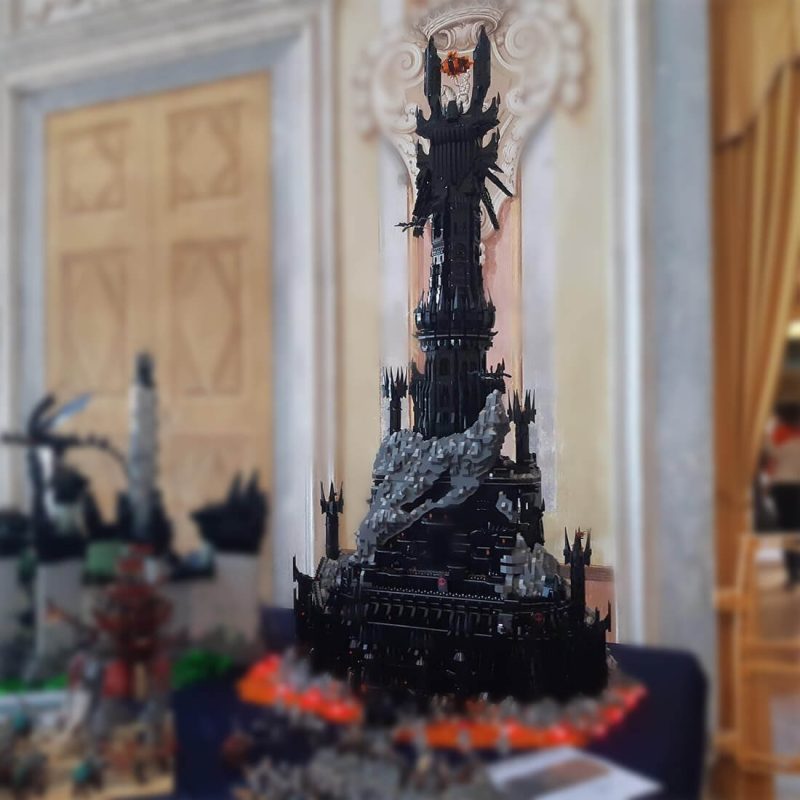
There is no polite way to say this: the Medieval Dark Fortress dominates any room it stands in. At 163cm tall (just under 5 feet 4 inches) and 89.7cm wide at its base, this is not a shelf model - it is a floor-standing sculpture that commands the same visual presence as a piece of furniture. The dark color scheme and gothic silhouette give it a brooding, cinematic quality that photographs incredibly well and draws attention from across a room. The interior details are visible through strategically placed windows and open sections, rewarding close inspection with throne rooms, libraries, and dungeon scenes that tell a story at every level. The upper dome and eye structure provides a dramatic visual focal point that caps the tower with unmistakable menace. This is the kind of display piece that makes people stop and ask questions, and that is the highest compliment any build can earn. If you have the space, nothing else in the brick-building world makes this kind of statement.
The vertical narrative created by the different interior rooms is a display feature that rewards repeated viewing in a way that most builds cannot match. First-time visitors will be struck by the sheer scale - the fortress standing taller than most adults is an immediate attention-grabber that draws people across a room. But return visitors start exploring the details: peering through the dungeon windows at the prison cells, noticing the books in the library, spotting the throne room's golden accents, and following the visual story from grim foundation to menacing crown. Each viewing reveals something new, and that depth of discovery is what separates a truly great display piece from a merely impressive one.
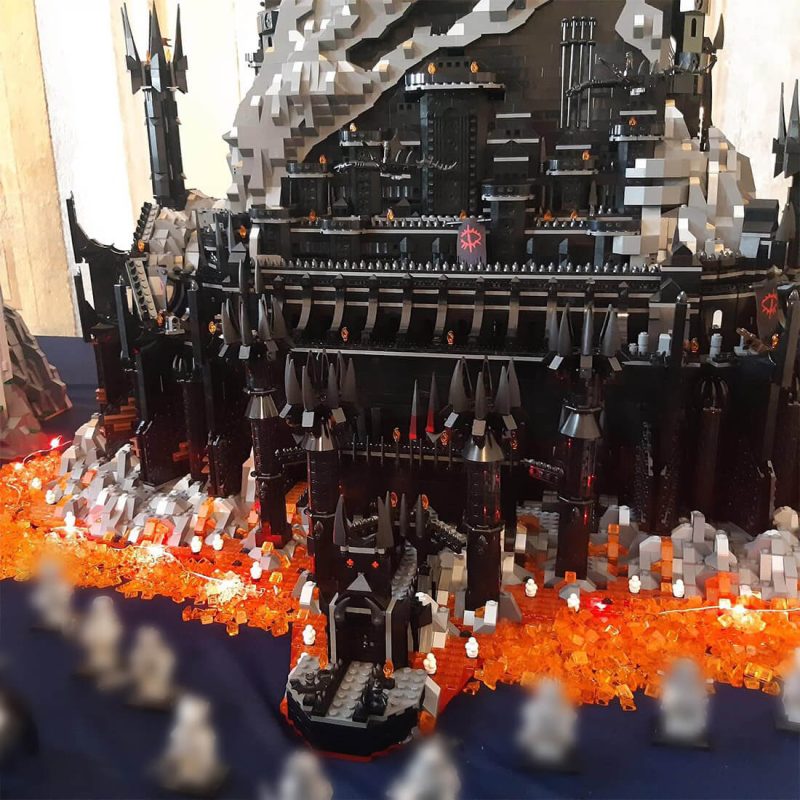
Lighting transforms this model dramatically. In natural daylight, the dark palette creates deep shadows in the recessed windows and doorways that give the fortress an almost photorealistic stone quality. Under warm artificial light, the dark greys and browns develop a rich warmth that softens the gothic severity. And if you add a small LED light inside the dome's eye element - a popular modification among builders of this set - the effect is genuinely theatrical. The eye glows with a baleful amber light that casts shadows down through the upper levels, transforming the fortress from an impressive display piece into something that feels alive. Whether you choose to add lighting or not, the Medieval Dark Fortress is a model that changes the character of whatever space it occupies, and few builds at any price point can make that claim.
A 17,693-piece licensed MOC design at this scale is firmly in the premium territory, and there is no getting around the fact that this is a significant investment. However, when you consider the cost-per-piece, the engineering complexity, and the sheer volume of dark-palette bricks included, the value proposition holds up well against sourcing these parts individually. The licensed design from LegoMocLoc means you are getting a professionally engineered build with proper instructions, not a loose parts list with vague assembly guidance. Comparable castle MOCs at this scale are rare, and official LEGO has never produced anything close to this size in the medieval theme. For the builder who wants the ultimate dark fantasy centerpiece and has the budget and space to commit, the Medieval Dark Fortress delivers a building experience and display piece that simply does not exist elsewhere in the market.
The value discussion for a set at this price point needs to account for what you are actually getting beyond the bricks. You are getting weeks of sustained building engagement - not hours, weeks. Each building session is a distinct experience with its own theme, its own techniques, and its own satisfactions. The entertainment value per hour of engagement compares favorably to any hobby activity, and the result at the end is a permanent display piece rather than a consumed experience. You are also getting a parts inventory that, if sourced brick-by-brick on BrickLink or other secondary markets, would cost substantially more than the set itself. The premium you pay over raw parts cost buys you the design, the instructions, and the assurance that every element will fit and the finished model will stand.
Where the value equation gets personal is in the space and commitment requirements. This is not a set you can impulse-buy and figure out later. You need to know where it will live before you start building, because at 163cm tall and nearly 90cm wide at the base, it permanently claims a piece of your living space. You need a building area large enough to accommodate six simultaneous sub-assemblies. And you need the patience to sustain a multi-week project without rushing. If all of those conditions align, the Medieval Dark Fortress delivers value that is simply unavailable from any other single product in the brick-building market. If any of them do not, this is a set that will frustrate rather than fulfill.
The Medieval Dark Fortress has a very specific audience, and it knows exactly who it is speaking to. This is a set for the experienced builder who has graduated from standard retail sets and is looking for the kind of challenge and spectacle that the official LEGO catalogue simply does not offer. You need building confidence - this is not a set for someone completing their second or third project - and you need the kind of spatial planning skills that come from having built enough large models to understand how modular construction works at scale.
Dark fantasy and gothic architecture enthusiasts will find this irresistible. If your shelves already hold castle MOCs, medieval dioramas, or dark-themed display pieces, the Medieval Dark Fortress is the ultimate centerpiece that ties an entire collection together. Tolkien fans will see obvious visual resonances in the dark tower aesthetic, and while this is not a licensed Lord of the Rings product, the design language speaks directly to that sensibility. Builders who enjoy the engineering side of the hobby will appreciate the structural techniques required to support 20 kilograms of assembled brick in a stable vertical structure. And collectors who value rarity and statement pieces will recognize that this is the kind of build that generates genuine reactions from anyone who walks into the room. If you have the space, the budget, and the ambition, the Medieval Dark Fortress is one of the most rewarding builds available anywhere in the brick-building world.
- ✓ Staggering 17,693-piece count delivers weeks of engaging build time
- ✓ Six modular components with richly detailed interior rooms
- ✓ 163cm tall - an absolute showstopper display piece
- ✓ Advanced SNOT and Technic techniques throughout
- ✓ Massive dark-palette parts haul for future MOC projects
- ✓ Licensed design by LegoMocLoc with proper instructions
- ✓ Interior scenes (throne room, library, dungeon, armory) reward close inspection
- ✓ Dome and eye structure is a genuine engineering showcase
- ✗ Requires dedicated floor space - will not fit on any standard shelf
- ✗ Nearly 20kg assembled weight makes repositioning a two-person job
- ✗ Premium price point is a serious commitment
- ✗ Some instruction steps demand careful attention at complex junctions
- ✗ Color palette is specialized - mostly darks with limited accent variety
- LetBricks - The Alternative MOC Site - Everything about LetBricks
- Lion Knights Church Review - Another medieval LetBricks build
- Dragon Slayer City Review - Medieval combat in LetBricks form
Skip this if your fortress experience stops at seasonal displays and quick builds. This set belongs with collectors operating at the level of dedicated parts inventory, builders with organized dark element stockpiles who understand the secondary market implications of owning 2,400+ dark gray tiles. The instruction manual is thorough but dense; construction assumes competency with advanced building techniques and the patience to work through identical-looking assembly sections where precision matters. A casual builder with three completed Official sets should not start here.
The secondary audience consists entirely of MOC designers who want the internal architecture of a legitimate fortress without designing from first principles. The core structure, load-bearing walls, proper staircase integration, roof reinforcement systems, becomes a platform for customization rather than an obstacle. Buyers in this camp typically expand upward, add custom spires, or integrate this as a centerpiece to a larger layout. Understanding which camp you belong to before committing matters significantly here.