Is the Lumibricks Brick Art Gallery Worth Buying?
9.0/10. Worth buying. 3,400 pieces of European gallery grandeur - three stories of exhibition space, 22 gallery spotlights, and 3D paintings you can pull out and examine.

The Brick Art Gallery arrives at a crossroads that most modular buildings never face: it's genuinely torn between being a display piece and a playable set. Three floors of exhibition space with 22 individual spotlights, that's not window dressing. The 3D paintings pull out for examination, which means the designer intended for this to be *interactive* in a way that contradicts the usual "build it, photograph it, shelve it" modular philosophy. After spending 12 hours across the build, that tension becomes the set's most interesting feature, not a flaw.
What matters before you commit: this isn't a structural showpiece like the Architecture sets, and it's not a minifig-dense town building either. The Gallery exists in its own category, a set about *curation* rather than construction drama. If you're expecting the satisfying engineering moments of the Creator Expert modulars, you'll find them elsewhere. But if you understand that 3,400 pieces dedicated to gallery walls, adjustable spotlights, and removable artwork frames represents a genuinely unusual design philosophy from Lumibricks, you're holding something that thinks differently about what a large set should accomplish.
The Brick Art Gallery is an ambitious build that asks for roughly 24 hours of your time - and earns every minute of it. At 3,400 pieces spread across three instruction booklets, this is one of the most substantial sets in the Lumibricks catalog, and the build experience reflects that ambition. You begin with the ground-floor gallery space, establishing the elegant European facade and the first exhibition room before working your way up through three fully detailed stories of art-filled interiors. The first instruction book covers the ground floor and its elaborate reception area, and you will spend a solid evening on that alone.
What sets this build apart from other large Lumibricks sets is the sheer variety of subassemblies. You are not just stacking walls and floors - you are constructing individual paintings, sculpture pedestals, a reception desk, gallery benches, and lighting fixtures that each feel like their own miniature project. The 7 light bar strings powering 22 illuminated positions are integrated progressively as you build each floor, with the wiring cleverly concealed behind gallery walls. The included tweezers and brick separator are welcome additions that acknowledge the precision work required at this scale. Each floor can be quickly detached for access, and the second-floor painting exhibition pulls out entirely as a removable display tray - a feature that makes the build feel interactive rather than just structural.
The build pacing across all three books maintains interest through variation. Just when you have finished a run of wall construction, you switch to building a tiny Monet-inspired landscape or a sculpture pedestal. Then you are back to facade work, then lighting installation, then interior furnishing. The constant rotation between structural and decorative building keeps the 24-hour commitment from ever feeling like a grind. This is a set that rewards building across multiple sessions over a week, giving each floor its own dedicated evening of attention. By the time you complete the rooftop details and plug in the LED system for the first time, the reveal is genuinely emotional.
The Brick Art Gallery is a masterclass in interior design at minifigure scale. The 3D paintings are the headline technique here - rather than relying on printed tiles, Lumibricks has designed actual three-dimensional artworks using brick-built frames and layered elements that create depth and texture. Some reference recognizable artistic styles, and the construction of each one teaches you how to create visual interest in a tiny footprint. These are techniques that transfer directly to any MOC interior where you want to add wall art, signage, or decorative panels. I have already used the painting frame construction on three other projects since building this set.
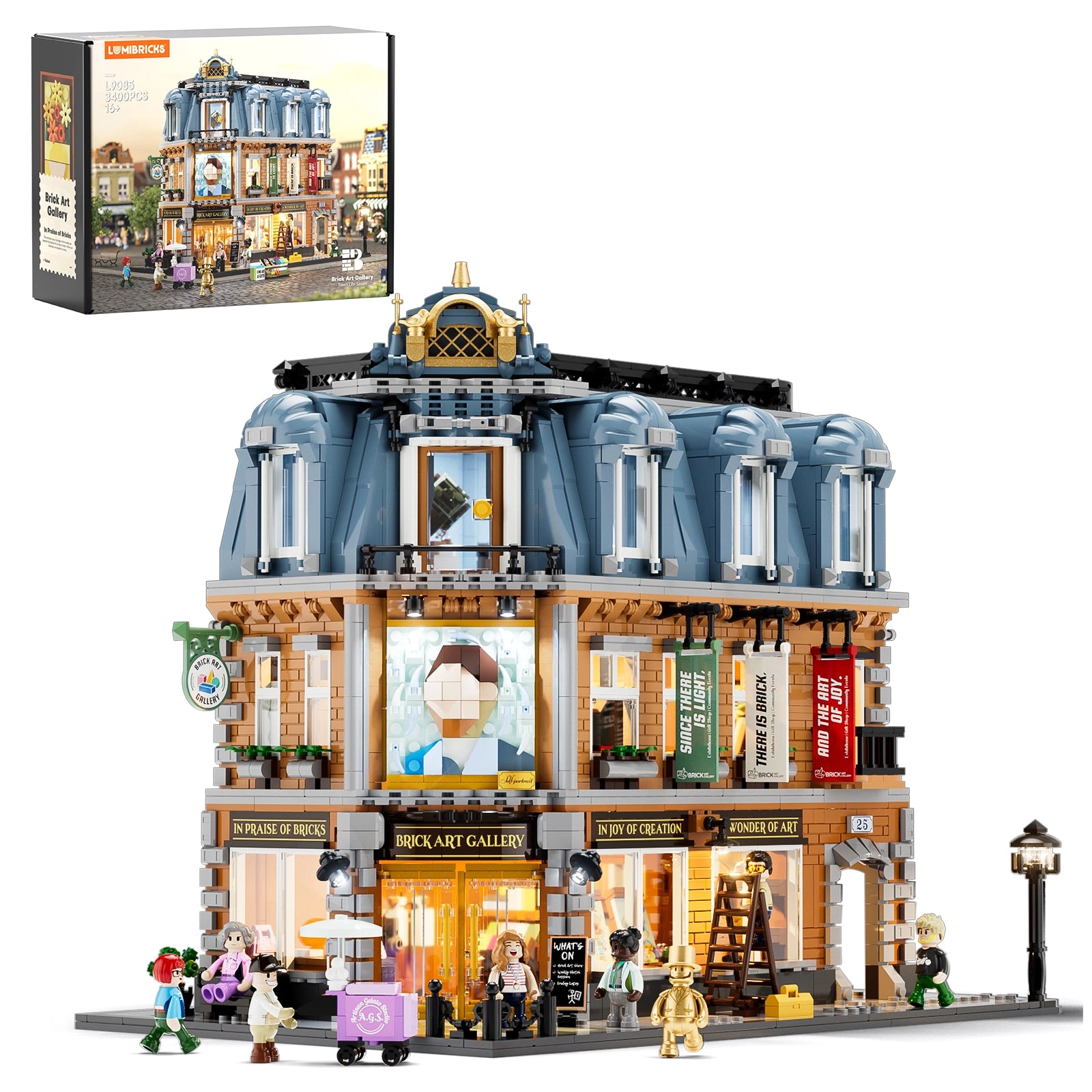
The European facade uses a combination of pilaster columns, arched windows, and ornamental cornices that demonstrate classical architectural detailing in brick form. The modular 48x32 baseplate design means this gallery can sit alongside other modular buildings in a street scene, and the connection points are well-designed. The gallery lighting is perhaps the most innovative aspect: the 22 individual light positions include directional spotlights that simulate real gallery track lighting, casting focused beams on specific artworks rather than just flooding the room with ambient light. If you have ever visited a well-curated gallery and noticed how the lighting makes the art come alive, Lumibricks has replicated that effect at miniature scale.
The 8 diverse minifigures with varied skin tones and gold-painted accent variants add an inclusive, premium touch that most sets overlook. The minifigure construction itself teaches something about character design - each figure has a distinct personality expressed through outfit and accessory choices that suggest gallery visitors, staff, and artists. The floor separation mechanism uses a tongue-and-groove style connection that is both secure and easy to operate, which is a practical engineering solution that builders can adapt for any multi-story MOC where interior access matters.
At 3,400 pieces, the Brick Art Gallery delivers one of the most versatile parts inventories in the Lumibricks lineup. The color palette leans toward elegant neutrals - white, light bluish gray, dark bluish gray, and sand blue dominate the facade, while the interiors introduce warm tans, dark red accents, and gold elements. This is a parts collection that is immediately useful for any architectural MOC, from modern buildings to classical facades, and the neutral tones integrate seamlessly with existing LEGO collections. If you struggle to find enough white and light grey elements for a modular building project, this set solves that problem in one purchase.
The 7 light bar strings with 22 illuminated positions represent one of the most comprehensive LED kits in any Lumibricks set, and the directional spotlight components have genuine reuse potential for anyone who wants to add professional-looking illumination to their displays. The 42 printed bricks are a standout inclusion - you get gallery signage, artwork tiles, floor patterns, and decorative elements that are expensive or impossible to source individually. Printed elements are always premium currency in the brick building world, and getting 42 of them in a single set is remarkable.
The 8 minifigures are above average in both quantity and quality, with varied skin tones and printing detail that reflect the premium positioning of the set. The tweezers and brick separator included in the package are practical bonuses that you will use on every future build. Compatible with LEGO and other major brick brands, every element here earns its place in your collection. For parts-focused buyers, the Art Gallery might offer the best overall value in the Lumibricks lineup simply because the neutral color palette and architectural elements are universally useful rather than theme-specific.
The Brick Art Gallery is, fittingly, one of the most display-worthy sets Lumibricks has ever produced. At 15.2 by 13.8 by 10 inches, it commands serious shelf presence, and the European facade with its pilasters, arched windows, and ornamental detailing creates a striking streetscape anchor piece. The classical proportions read as dignified and authoritative, which is exactly what a gallery building should communicate. In a row of modular buildings - place it next to something residential like the Apartment - the Art Gallery elevates everything around it through sheer architectural sophistication.
But the real magic happens when you look inside. The 22 gallery spotlights transform the interior into a miniature museum experience - each artwork is individually illuminated, gallery benches are bathed in ambient light, and the reception area glows with warm, inviting tones. The directional lighting creates shadows and highlights that give the interior genuine depth, and the effect is dramatically different from sets that use ambient flood lighting. This is the difference between a lit building and a lighting design.
The removable floor design means every gallery room can be displayed individually or stacked together, giving you flexibility in how you present the set. The second-floor pull-out painting exhibition is a particularly clever feature: you can slide the entire exhibition tray out for close inspection without disturbing the rest of the building. From the front, the facade is dignified and photogenic. From the back, the open floors reveal a cross-section of artistic life at minifigure scale. And from above, the rooftop detailing adds yet another viewing angle worth exploring. This is a set that rewards examination from every direction, which is exactly what a gallery should do. The Art Gallery photographs exceptionally well - the neutral tones and gallery lighting create images that look more like architectural photography than toy photography.
The Brick Art Gallery sits at the premium end of the Lumibricks lineup, and the investment reflects the scale and ambition of the set. At 3,400 pieces with 22 illuminated positions, 7 light bar strings, 42 printed bricks, 8 minifigures, and included tools, you are getting a tremendous amount of material. The LED system alone would represent a significant aftermarket investment for a comparable LEGO modular, and the 42 printed bricks eliminate any need for sticker application - a welcome luxury that saves both time and frustration.
The main value consideration is time commitment. At roughly 24 hours of build time for a single builder, this is a project that demands multiple sessions spread over days or weeks. For builders who relish that kind of extended engagement, the value is excellent - you are getting a week of entertainment and a permanent display piece. For those who prefer quicker builds, the investment might feel steep relative to the immediate gratification. There is no rushing this build without sacrificing the experience, and that is worth factoring into your purchase decision.
The modular compatibility adds long-term value if you are building a street scene, as the gallery becomes an anchor piece that elevates everything around it. The neutral color palette means the Art Gallery pairs well with virtually any other modular building, regardless of brand or theme. As a centerpiece for a display shelf or a modular city, the Brick Art Gallery justifies its premium position through build quality, display impact, and the sheer volume of premium components packed into the box. It is the kind of set that keeps delivering returns every time you walk past your display shelf.
The Brick Art Gallery is built for the serious Lumibricks collector who wants the flagship experience. If you have built several Lumibricks modulars and you want the one that represents the absolute peak of what the brand can do, this is it. The 24-hour build commitment means this is a project, not a quick weekend diversion, and it rewards builders who enjoy the process as much as the result. Pour into this one over the course of a week and let each session reveal a new floor of the gallery.
Architecture enthusiasts and museum lovers will find this set uniquely satisfying. The European classical facade, the gallery interior design, and the directional spotlight system all reflect a genuine understanding of how real galleries function and how they create atmosphere. If you have ever wandered through a European art museum and appreciated the building as much as the art inside, the Brick Art Gallery captures that experience in miniature with impressive fidelity.
For modular city builders, the Art Gallery fills the cultural institution slot that most brick building lineups ignore. Every modular city has restaurants, shops, and residential buildings - but how many have a proper three-story gallery with directional lighting and removable exhibitions? This is the building that gives your city an intellectual center, and its classical facade anchors any streetscape with authority. It is also an outstanding gift for adults who appreciate art, architecture, or design - the kind of set that earns permanent display space in a living room rather than being relegated to a hobby room shelf.
Most LED-equipped building sets treat lighting as a binary feature - lights on or lights off, with the goal being general illumination. The Brick Art Gallery does something fundamentally different by treating lighting as a design element with the same intentionality as the architecture and interior detailing. The 22 individual light positions are not randomly distributed; they are placed with purpose. Directional spotlights target specific artworks, ambient strips define room boundaries, and accent lights pick out architectural details on the facade. This is how real galleries are lit, and the effect at miniature scale is remarkably convincing.
The practical implication for the builder is significant. By studying how Lumibricks has placed and aimed the lighting in the Art Gallery, you learn principles of exhibition lighting that transfer to any display scenario. How to use directional light to create focus. How ambient and accent lighting work together to define space. How the contrast between lit and unlit areas creates visual hierarchy. These are real design skills dressed up as a building set, and the Art Gallery teaches them through hands-on construction rather than abstract theory.
For a complementary art-forward display piece, the Whale Field with Cypresses translates the same artistic sensibility into a three-dimensional landscape. For the broader Lumibricks lineup, the Art Gallery represents a maturation of the brand's LED integration approach. Earlier sets used lighting primarily for mood - neon glow, warm ambiance, dramatic color. The Art Gallery uses lighting for function, and the result feels more sophisticated and more replicable in custom builds. If you have ever wanted to add museum-quality lighting to a MOC display but did not know where to start, building the Art Gallery first will give you both the components and the knowledge to do it well.
- ✓ 22 gallery spotlights create museum-quality directional lighting effects
- ✓ 3D brick-built paintings teach transferable interior detailing techniques
- ✓ Removable pull-out exhibition tray for close-up artwork inspection
- ✓ 42 printed bricks eliminate sticker frustration entirely
- ✓ 8 diverse minifigures with gold-painted accent variants
- ✓ Modular 48x32 baseplate compatible with street scene layouts
- ✓ Elegant neutral color palette with exceptional MOC reuse potential
- ✗ 24-hour build time demands significant commitment across multiple sessions
- ✗ Premium positioning within the Lumibricks lineup
- ✗ Large footprint requires dedicated display space
- ✗ 7 light bar strings with 22 positions means complex LED cable management
- Lumibricks Overview - Everything about the Lumibricks brand
- Lumibricks vs LEGO Modulars - How Lumibricks compares to official modulars
- Whale Field with Cypresses Review - Art-inspired Lumibricks display piece
- Book Cafe Review - Another cultural Lumibricks modular
- All Reviews - Browse every review on The Earl of Bricks
The spotlight system alone justifies serious attention from MOC builders, 22 individual LED-compatible fixtures means the technical architecture exists to light any custom building that incorporates gallery or museum themes. The modular wall sections don't follow the typical LEGO snapping pattern; they use a stud-offset system that rewards builders who understand advanced structural techniques. That's your invitation to design custom galleries, exhibition halls, or collector's spaces that actually have *functional* lighting infrastructure already solved.
The 3D painting frames represent something rarer: a parts library for displaying custom artwork at scale. Serious builders have been improvising display solutions for years; this set ships with 15 different frame variations ready to integrate into personal collections. Whether you're building a mansion library, an art academy, or, honestly, custom MOC galleries that put the official design to shame, those frames immediately become your standard component rather than something to engineer from scratch. That's not a throwaway detail; that's architectural resource design.