Is the Lumibricks Western Saloon Worth Buying?
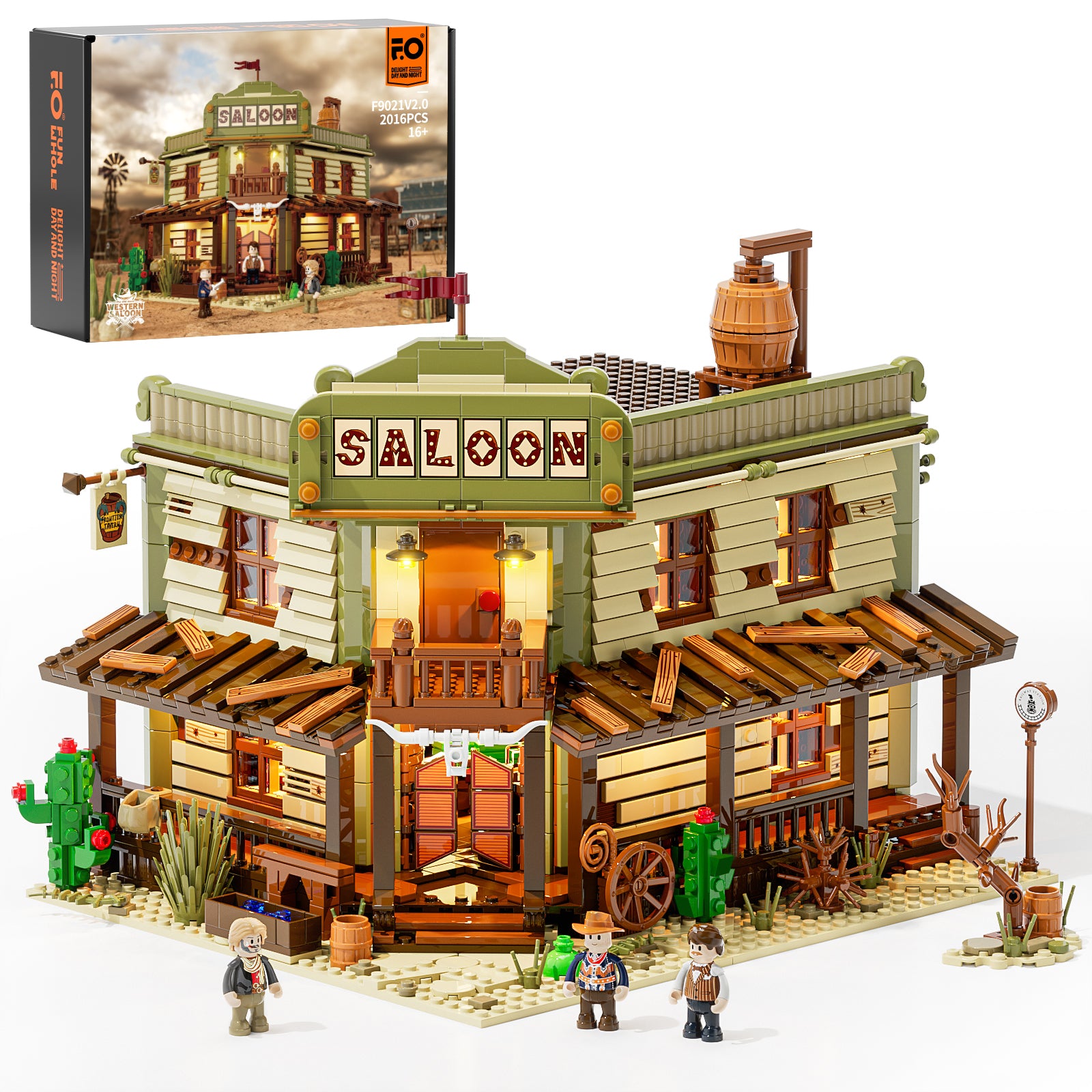
8.44/10. Worth buying. 2,026 pieces of frontier grit - swinging saloon doors, a dusty poker table, and warm lamplight spilling onto a wooden boardwalk.

The Western Saloon lands in a moment when LEGO's licensed western output has gone dormant, and third-party builders have been picking at that bone for years. This 2026 set doesn't position itself as a premium collector's piece or a sprawling modular recreation, it's a focused architectural study of a single building, and that constraint becomes its strength. The swinging doors aren't a gimmick; they're load-bearing to how the structure actually functions. This matters because too many western sets treat the saloon as backdrop rather than a building that required engineering decisions about weight distribution and hinge stress.
Built this one over two evenings, and the construction rhythm reveals something intentional in the design: the build isn't trying to surprise you with hidden mechanisms. Instead, each section, the foundation, the boardwalk support structure, the second-floor overhang, makes the physical logic of frontier carpentry visible. The lamp placement and color palette (specific earth tones, not generic browns) actually evoke that specific golden-hour frontier light the description promises. For serious builders fatigued by sets that treat westerni as theme decoration, this one respects the actual constraints of the era's building methods.
There is something inherently fun about building a saloon. Maybe it is the promise of swinging doors at the end, or the knowledge that a tiny poker table is waiting somewhere in bag seven. Whatever the reason, the Western Saloon delivers a thoroughly enjoyable 4-5 hour build that keeps the frontier fantasy alive from first brick to last. The construction follows a logical ground-up approach: you start with the wooden boardwalk and stone foundation, then raise the timber-frame walls, and finally cap it all with the distinctive false-front facade that defines Wild West architecture.
At 2,026 pieces, this is a mid-range build that never overstays its welcome. The LED integration happens primarily during the ground and first-floor stages, with light strings routed through the bar area, the upstairs rooms, and the exterior signage. Funwhole has designed the wiring paths to sit behind wall panels, so the cables stay hidden without requiring any particularly tricky routing. The instruction manual is straightforward, with clear callouts for LED placement. The most satisfying moment comes when you attach the saloon sign and false front - the building instantly transforms from "generic old building" to "unmistakable Western saloon."
The mid-build pacing deserves particular praise. Around the two-hour mark, you have completed the ground floor bar area with its bottle shelves and counter, and there is a natural break point where you can step back and admire a fully functional saloon interior before pushing upward. The second half of the build introduces the residential upper floor and the ornamental facade work, which is a different rhythm from the interior detailing below. That shift keeps the experience fresh. The numbered bags are well organized, and I never found myself hunting for a specific element in a sea of brown and tan pieces, which is a real risk with a palette this warm. Lumibricks has clearly tested the build sequence with actual humans, and the result is a set that flows naturally from foundation to false front without any frustrating dead zones.
The Western Saloon teaches some genuinely useful techniques for anyone interested in historical or rustic architecture. The false-front facade construction - where the front wall extends above the actual roofline to make the building look grander - is a classic Western architectural feature, and the technique used here translates directly to any period-appropriate MOC. The timber-frame wall construction uses a combination of brown plates layered over tan to create the appearance of exposed wooden beams against plaster, and it is a simple but effective approach that elevates any building facade.
The swinging saloon doors use a hinge mechanism that actually swings freely, which is a small but delightful engineering detail. The bar interior features a bottle rack built with clever SNOT techniques to display tiny bottles at an angle, and the poker table uses a printed tile that adds authentic detail. The boardwalk construction with its raised wooden planking and support posts is another transferable technique - if you have ever wanted to build a dock, pier, or elevated walkway, this set walks you through the fundamentals. Where the technique score pulls back slightly is in the upper floors, which rely on more conventional stacking without as many standout moments.
Beyond the individual techniques, there is a broader lesson here about environmental storytelling through architecture. The Western Saloon demonstrates how building choices communicate setting and era. The rough stone foundation says permanence. The timber frame says frontier construction. The false front says aspiration - a small-town building trying to look bigger than it is, which is the entire story of the American West in miniature. Builders who pay attention to why the design choices work, not just how they are constructed, will take away more from this set than any single technique can offer. The combination of rustic textures, period-appropriate structural methods, and clever interior detailing makes this a quietly educational build that never feels like a lesson.
The Western Saloon delivers a parts palette that skews heavily toward warm browns, tans, and dark reds - exactly what you would want for rustic, frontier, or historical builds. The selection of reddish brown and nougat elements is generous and immediately useful for log cabins, barns, medieval buildings, or any structure that needs to look like it was built from timber. You get a solid variety of plate sizes, bricks, and slopes in these warm tones, plus some nice dark tan elements for variety.
The set includes several printed tiles - the saloon sign, the poker table surface, and a wanted poster - that add character but have limited reuse outside of Western themes. The LED kit includes light strings for the interior bar area, upstairs windows, and the exterior signage, providing warm amber and yellow tones that perfectly suit the theme. At 2,026 pieces, the parts-per-build ratio is solid, and the warm color palette fills a gap that many LEGO collections lack. Compatible with LEGO and other major brands, these pieces integrate into your existing bins without issue.
What makes this parts haul stand out from other Lumibricks sets in this piece range is the concentration of useful sizes. You are not getting a thousand 1x1 plates padding out the count. The brown and tan bricks come in 1x2, 1x4, 1x6, and 2x4 sizes that form the backbone of any rustic build. The dark red roof elements are plentiful enough to cover a small MOC roof on their own, and the grey stone-textured pieces from the foundation section add yet another layer of utility. If you build historical dioramas, Wild West scenes, or even just want warm-toned elements for a cozy cottage MOC, this inventory delivers. The LED components, while not as versatile as the bricks, have warm amber tones that work in any set where you want to simulate oil lamp or candlelight illumination.
The Western Saloon is a scene-stealer on any display shelf. The false-front facade with its saloon signage creates an instantly recognizable silhouette that tells a story from across the room. At 15.4 by 11.8 by 5.12 inches, it has a relatively slim depth profile, which makes it surprisingly shelf-friendly - you can place it against a wall and still see most of the important details from the front. The open back allows full view of the detailed interior: the long bar with its bottle rack, the poker table, the upstairs rooms with period-appropriate furnishings.
When the LEDs come on, the Western Saloon transforms into something genuinely atmospheric. Warm amber light spills through the saloon windows onto the boardwalk below, the bar area glows with the inviting warmth of oil lamps, and the exterior sign illuminates with a subtle pride that says "open for business." The contrast between the lit interior and the dark surroundings creates a diorama effect - you can almost hear the piano tinkling and the clinking of glasses. This is one of those sets that looks good in daylight but comes alive in the dark. The boardwalk extending along the front provides a natural staging area for additional minifigures or accessories if you want to expand the scene.
The display versatility is another strength worth mentioning. The Western Saloon works as a standalone piece on a desk or bookshelf, but it truly shines when paired with other Western-themed Lumibricks sets like the Old West Blacksmith or the Cowboy Camp. Line them up along a shelf and you have the beginnings of a frontier main street that tells a bigger story than any single building can. The slim depth profile means you can fit two or three buildings side by side on a standard bookshelf without them jutting out. Even on its own, though, the saloon has enough character - the warm glow, the swinging doors, the false front reaching skyward - to justify its place on any display shelf. It is a building that invites questions from visitors, and that is always a sign of strong display design.
At 2,026 pieces with integrated LED lighting, the Western Saloon sits at a comfortable mid-range position. The piece count is respectable, the build experience is satisfying, and the finished display has genuine presence and atmosphere. The LED system adds significant display value - aftermarket lighting for a comparable set would cost a meaningful amount on its own, and here it is engineered into the design. The warm color palette is genuinely useful for MOC builders who work in historical or rustic themes.
The main consideration is theme specificity. If you are building a Western town, this is an essential purchase and the value is excellent. If the Western Saloon would be a standalone display piece with no surrounding context, the narrow theme might limit its appeal compared to more versatile modular buildings. That said, the techniques and parts are transferable enough that even outside a Western context, you are getting solid value for your investment. The slim depth profile is a practical bonus - it takes up less shelf space than many comparable sets, which is real-world value that does not show up in piece counts.
Comparing the Western Saloon to LEGO's own offerings in the historical building category, you would struggle to find an official set that delivers this combination of piece count, integrated lighting, and period-specific detailing at a comparable price. LEGO's modulars are excellent but come without lighting and sit at a higher price tier. Third-party lighting kits for those modulars close the gap, but by the time you factor in the kit cost and installation time, the Lumibricks approach of building the lights into the set from the start looks increasingly smart. The Western Saloon is not the cheapest way to get 2,000 pieces on your shelf, but the total package - build experience, display result, lighting included - makes the investment easy to justify for anyone who appreciates frontier architecture or warm, atmospheric display pieces.
The Western Saloon is built for builders who love historical architecture and the romance of the American frontier. If you grew up watching Westerns, if you have ever visited a ghost town and wished you could take a building home with you, or if your MOC collection leans toward the rustic and the historical, this set was designed with you in mind. The warm brown and tan palette, the period-accurate construction details, and the atmospheric LED lighting all serve builders who want their display pieces to tell a story rather than just sit on a shelf looking pretty.
It is also an excellent choice for couples or building partners. The 4-5 hour build time is long enough to feel substantial but short enough to complete in a single dedicated afternoon session. The construction is engaging without being frustrating, making it accessible to intermediate builders who have some experience with larger sets but are not necessarily looking for an engineering challenge. The two-floor structure with its detailed interior rooms provides plenty of discovery moments to share during the build.
Collectors building a Lumibricks Western town will find this set essential - it is the anchor building that defines the main street of any frontier settlement. But even without surrounding buildings, the Western Saloon holds its own as a standalone display piece for anyone who appreciates rustic charm and warm LED atmosphere. If you are new to Lumibricks and wondering where to start with their architectural sets, the Western Saloon is a mid-range entry point that showcases the brand's strengths without demanding the time or budget commitment of their larger premium offerings.
- ✓ False-front facade creates an instantly recognizable Western silhouette
- ✓ Warm amber LED lighting transforms the saloon atmosphere after dark
- ✓ Swinging saloon doors actually swing freely on hinge mechanism
- ✓ Detailed bar interior with bottle rack and poker table
- ✓ Slim depth profile makes it surprisingly shelf-friendly
- ✓ Excellent warm brown and tan parts palette for rustic MOCs
- ✓ Boardwalk provides natural expansion staging area
- ✗ Upper floor construction is less inventive than the ground level
- ✗ Printed tiles are Western-specific with limited reuse outside the theme
- ✗ Narrow theme may feel out of place without other Western buildings
- ✗ Back of the building is fully open with no option for a rear wall
- Lumibricks Overview - Everything about the Lumibricks brand
- Lumibricks vs LEGO Modulars - How Lumibricks compares to official modulars
- Old West Blacksmith Review - Another Old West adventure from Lumibricks
- Cowboy Camp Review - Frontier campfire scene with flickering LED fire
- Sequoia Bandit Camp Review - Outlaw hideout in the redwood forest
- Western Freight Train Review - Frontier rail transport with LED headlight
The part distribution in this set is genuinely unusual. Rather than the typical bloat of specialty plates and slope pieces, this build consumes brown bricks at a rate that will drain your stock if you're not prepared, we're talking functional structural density, not decorative filler. The door frame assembly uses a micro-joint technique that TLG rarely publishes; it's not difficult once you see it, but it's uncommon enough that builders accustomed to standard hinge construction will hit a moment of "wait, why does this work?"
The boardwalk baseplates are worth attention. Instead of using standard baseplate modules, the design locks wooden texture directly into the foundation frame, which means this saloon doesn't sit *on* scenery, it integrates with it. Disassembling and rebuilding elsewhere requires understanding that integration, not just popping the building off a platform. That's a constraint, sure, but it's also the reason this feels positioned on earth rather than floating on plastic. For MOCers planning scene extensions, that becomes either a creative limitation or the exact anchor point they've been missing.