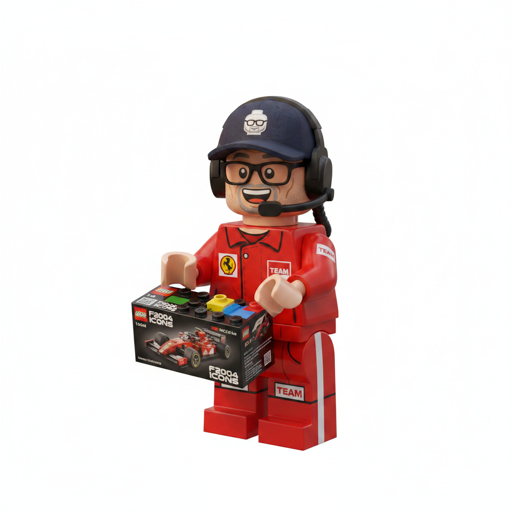
Three Technic F1 sets on one shelf sounds simple until you actually own them. Then the real question hits: which one deserves the real estate? These aren't just three cars that happen to be the same scale. The McLaren MCL39, Ferrari SF-24, and Red Bull RB20 represent three completely different engineering philosophies within the same constraints. The MCL39 leans mechanical complexity. The Ferrari prioritizes visual accuracy and symmetry. The RB20 splits the difference but with its own quirks. After building and displaying all three, the differences matter far more than casual builders assume, and most online comparisons miss the real tradeoffs entirely.
The gap between these sets isn't about paint color or sticker placement. It's about how LEGO chose to solve the problem of translating real engineering into 1,500 to 1,700 pieces. One set will feel like a mechanical marvel in your hands during build. Another will photograph better and hold up longer on the shelf. A third sacrifices a bit of both to deliver something else entirely. Your choice depends on what you actually care about, not what the box promises. This comparison cuts through that noise.
Three Cars. One Decision.
LEGO Technic's 1:8 scale Formula 1 series has grown into one of the most respected product lines in the entire catalog. Each car is an engineering exercise that takes a full weekend to assemble, fills a shelf with presence, and captures the mechanical DNA of a real Grand Prix machine in pin-and-beam form.
The problem is choosing. At $200+ each, most builders are picking one -- maybe two if the budget allows. So which one deserves the spot?
We built all three. We scored all three. Here's how they stack up.
The Specs
| Spec | McLaren MCL39 (42228) | Red Bull RB20 (42206) | Ferrari SF-24 (42207) |
|---|---|---|---|
| Pieces | 1,675 | 1,639 | 1,361 |
| Our Score | 9.36 | 9.20 | 9.10 |
| Build Time | 8-12 hrs | 8-10 hrs | 7-10 hrs |
| Scale | 1:8 | 1:8 | 1:8 |
| Primary Colors | Papaya orange, black | Dark blue, yellow | Red, black |
| Key Mechanism | DRS + V6 engine | Steering + V6 | Suspension + V6 |
Round 1: Build Experience
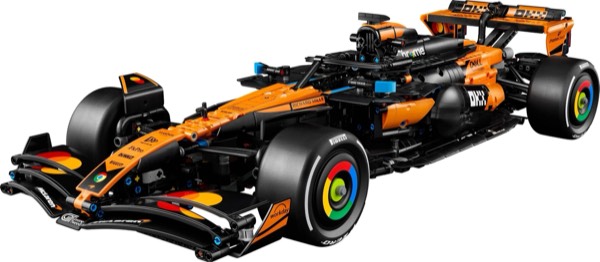
McLaren MCL39 wins this round.
The MCL39 is the fifth iteration in this series, and it shows. LEGO has had years to refine the build sequence, and the result is a construction process that flows with real momentum. The build mirrors how a real F1 car comes together: chassis and drivetrain first, suspension geometry second, bodywork third, livery details last. Each phase has its own sense of completion, which keeps motivation high across what is ultimately a 10+ hour commitment.
The DRS mechanism is the standout engineering moment. When you activate it and watch the rear wing flatten, there's a mechanical satisfaction that the other two cars don't quite match. It's the moment where bricks stop feeling like bricks and start feeling like engineering.
The Red Bull RB20 follows a similar phased approach and delivers a strong build, but the steering mechanism -- while impressive -- isn't as visually dramatic as the DRS. The Ferrari SF-24 has the shortest build of the three due to its lower piece count, which some builders will appreciate and others will feel shortchanged by.
Verdict: McLaren > Red Bull > Ferrari
Round 2: Display Quality
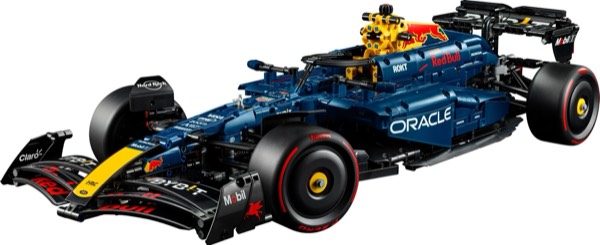
This one depends on your shelf.
The McLaren's papaya orange livery is the most visually striking of the three. It photographs beautifully, pops against dark shelving, and has the kind of color confidence that draws attention from across a room. If you're displaying a single F1 car and want maximum visual impact, the MCL39 is the pick.
The Red Bull's dark blue and yellow is more subdued but carries authority. It reads as serious and technical. On a shelf with other dark-themed display pieces, it integrates seamlessly. On a white shelf, the contrast is striking.
The Ferrari has the heritage advantage. Red means racing to most people, and the SF-24 carries that association immediately. The Rosso Corsa shade LEGO uses for the bodywork panels is accurate and deep. For brand recognition alone, the Ferrari wins casual observer attention every time.
All three are approximately 65cm long, so shelf space requirements are identical. If you're planning to display more than one, the three different color palettes actually complement each other well as a group.
Verdict: McLaren for impact. Ferrari for recognition. Red Bull for restraint.
Round 3: Engineering and Mechanisms
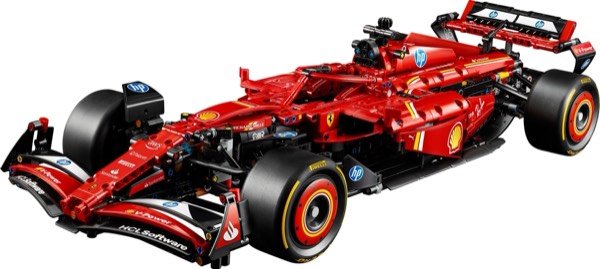
Each car features a V6 engine with moving pistons, which has become the standard mechanical centerpiece of the series. Turn the rear wheels and the engine block comes alive. All three execute this well.
Where they differ is in the secondary mechanisms:
- McLaren MCL39: Working DRS (Drag Reduction System). The rear wing flattens via a lever mechanism. This is the most visually dramatic feature across all three cars. When F1 fans visit your shelf, this is the detail they'll want to see activated.
- Red Bull RB20: Functional steering connected to the front suspension geometry. Turn the steering mechanism and the front wheels articulate with realistic camber changes. Technically sophisticated but less visually obvious than the DRS.
- Ferrari SF-24: Pushrod-activated suspension that compresses when you push down on the bodywork. A subtle feature that rewards hands-on interaction but isn't visible during static display.
Verdict: McLaren for drama. Red Bull for realism. Ferrari for subtlety.
Round 4: Parts Value
For builders who view sets partly as a parts investment, the equation shifts.
The McLaren's papaya orange Technic panels are among the rarest color elements in the current catalog. These panels barely exist outside the MCL39 and its McLaren predecessors, giving them outsized secondary market value. If you're a MOC builder who works in unusual colors, the McLaren is a goldmine.
The Red Bull's dark blue beams and panels are uncommon but not quite as rare as the papaya elements. The yellow accents are more broadly available across other sets.
The Ferrari's red Technic elements are desirable and always in demand, but red is a more common color across the LEGO catalog generally. The parts are valuable but not as exclusive.
On a pure piece count basis, the McLaren leads at 1,675 pieces, followed by the Red Bull at 1,639, with the Ferrari trailing at 1,361. That's a 23% piece gap between first and last.
Verdict: McLaren > Red Bull > Ferrari
Round 5: The Score
| Category | McLaren | Red Bull | Ferrari |
|---|---|---|---|
| Build Experience | 1st | 2nd | 3rd |
| Display Quality | 1st | 3rd | 2nd |
| Engineering | 1st | 2nd | 3rd |
| Parts Value | 1st | 2nd | 3rd |
| Overall Score | 9.36 | 9.20 | 9.10 |
The Verdict
If you're buying one: The McLaren MCL39 (42228). It leads in every category we measured. The DRS mechanism alone justifies the build. The papaya livery dominates any shelf. The parts value is the highest of the three. At 1,675 pieces, you're getting the longest and most satisfying build experience.
If you're buying two: McLaren + Ferrari. The color contrast between papaya orange and Rosso Corsa is stunning on display together. The build experiences are different enough (DRS vs suspension) that you won't feel like you're repeating yourself.
If you're buying all three: You already know what you're doing, and we respect it. Displayed together, the three liveries create a grid that looks like a podium celebration frozen in brick. Build them in order of release for the most satisfying progression of engineering improvements.
If budget is the primary factor: Wait for a LEGO VIP points event or a retailer sale. These sets rarely go below 20% off, but that discount on a $200+ set is meaningful. Track prices on GameSetBrick to catch the best deals.
Full Reviews
- McLaren MCL39 (42228) - Full Review
- Red Bull RB20 (42206) - Full Review
- Ferrari SF-24 (42207) - Full Review
See all F1 sets ranked: Best LEGO F1 Sets Ranked 2026
Sets Leaving Shelves
The Ferrari Daytona SP3 (42143) -- another Technic flagship -- retires July 2026. We track every major retirement on our Retiring Sets 2026 page.
The temptation with Technic F1 sets is to treat them as color variants of the same underlying product. They're not. The engineering differences between these three cars will determine whether your build feels engaging or repetitive, whether your display piece maintains structural integrity in six months, and whether you'll want to rebuild or modify it later. The McLaren and Ferrari, for instance, handle suspension articulation completely differently despite covering the same 1:8 scale. One choice affects how satisfying the motorized functions feel. The other impacts how well the chassis holds together after multiple transformations between display and play modes.
Most guides rank these sets by aesthetics alone, which is backwards. On a collector's shelf, all three look professional. The real decision tree branches at durability, build experience, and parts utility. Someone planning to swap pieces between projects needs different information than someone buying this to park on a shelf untouched for two years. The set you choose will influence your entire Technic F1 collecting strategy going forward, whether you realize it now or not.