Is the LEGO Knockturn Alley Wizarding Shops Worth Buying?
8.4/10. Worth buying. Diagon Alley's shadowy cousin finally gets its own shops, and the dark magic is the whole point.
Comparing your options? See where it lands in our best Harry Potter display sets.

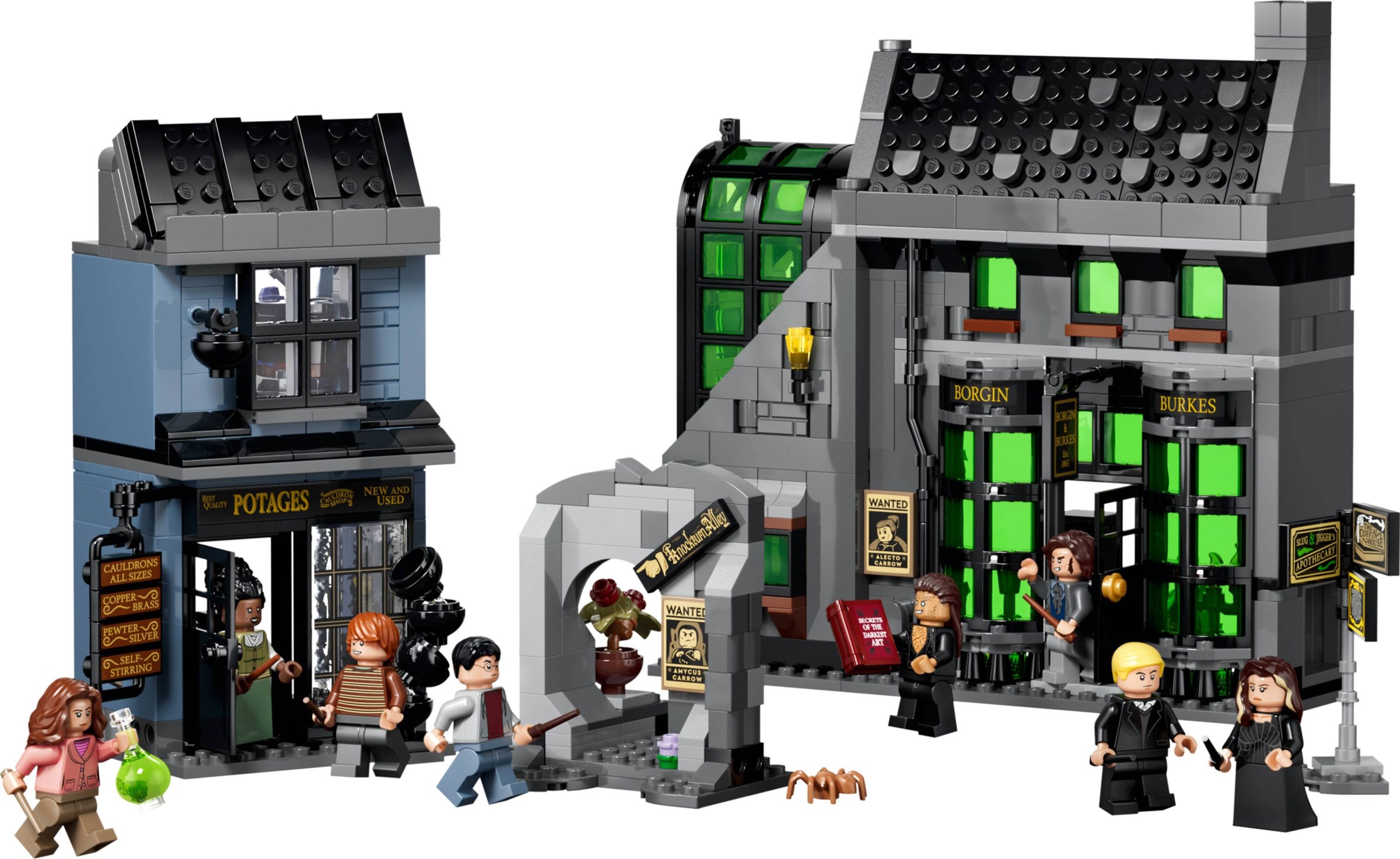
I have owned every Diagon Alley set LEGO has released since the modular shops idea took hold, and every time, I have quietly wondered when they would let us build the alley nobody wants to admit they know. Knockturn Alley is the answer, and it took long enough that I had genuinely stopped expecting it. This is not a bright, cheerful corner of the wizarding world. It is Borgin and Burkes, a shop full of cursed objects and things that should stay in locked cabinets, paired with Potage's Cauldron Shop, the closest thing to a legitimate business this alley offers. That contrast is the entire appeal.
What I appreciate most is that LEGO did not sand down the discomfort to make it more shelf-friendly. The Hand of Glory grabs at you. The Vanishing Cabinet references one of the more unsettling plot devices in the whole series. Draco and Narcissa Malfoy show up as minifigures, not Harry and his friends playing dress-up villain. This set trusts that builders who love this world also love its uncomfortable corners, and after years of relentlessly cheerful wizarding shops, that trust feels earned.
At 788 pieces split across two connected shop buildings, this is a mid-sized modular build with enough going on in each structure to keep the session interesting. You build Borgin and Burkes first in most box configurations, working through the cramped, cluttered interior before moving to the exterior facade with its weathered, crooked-window aesthetic that Knockturn Alley demands. Potage's Cauldron Shop follows, and it is a nice tonal shift, still shadowy but with a bit more warmth in the color palette given its cauldron-stocked, semi-legitimate business.
The interior detailing is where this set earns its keep. Borgin and Burkes packs in small vignette moments, the cursed Opal Necklace displayed like the trap it is, shelving crammed with dark artifacts, and a Floo Network connection point that ties this set mechanically and narratively to the wider Diagon Alley range. The self-stirring magic cauldron in Potage's shop is a clever small build within the build, a little mechanism that rewards builders who enjoy figuring out how LEGO designers hide function inside decoration.
Technique-wise, this is not a set that will teach you dramatically new skills if you have built several modulars before, but it applies familiar techniques well. Roof angles are varied between the two shops so they read as distinct buildings rather than a repeated module, and the connecting arch that links Borgin and Burkes to Potage's is a genuinely satisfying structural moment, the kind of connector piece that makes a two-building set feel like one coherent street corner rather than two separate boxes glued together.
Plan for a comfortable single evening session, closer to three to four hours for a builder with modular experience. The instructions follow LEGO's current wizarding world format, which by now is well refined, clear bag numbering, sensible sub-assembly breaks, and enough visual variety between the two structures that fatigue never sets in. Newer builders in the 8+ recommended range will need patience with some of the smaller cursed-object details, but nothing here crosses into frustrating territory.
The Hand of Glory mechanism deserves a specific mention because it is the kind of playful engineering touch that separates a good licensed set from a merely adequate one. It is a simple lever action, but it is exactly the sort of interactive detail that turns a static shop interior into something you actually want to demonstrate to someone standing in your living room.
Knockturn Alley photographs and displays exactly as it should: crooked, dim, and slightly menacing. The exterior color work leans into weathered stone grays, muddy browns, and near-black window frames, a deliberate departure from the warmer palette of the original Diagon Alley sets. If you have those shops on a shelf already, Knockturn Alley reads as an obvious extension rather than a repeat, the darker corner of the same street.
At roughly 19 by 19 by 7 centimeters footprint per the packaged dimensions, this is a compact addition compared to some of the larger wizarding world builds, which actually works in its favor. It is designed to slot into an existing Diagon Alley display via the connecting arch, and the modularity is a real strength here, not a marketing bullet point. You can run it as a standalone two-shop diorama or extend an existing street scene.
The two shop facades use varied window shapes and roofline heights, which is a small detail that matters enormously for a set meant to sit beside other modular shops. Nothing here reads as a repeated template, and the crooked, slightly off-kilter construction style suits the alley's reputation as the place respectable witches and wizards avoid.
Interior accessibility is handled well for a set this size. Both shops open up via removable roof sections and swinging wall panels, so the cursed-object clutter inside Borgin and Burkes and the cauldron stacks in Potage's remain visible and playable rather than sealed behind a facade you can only appreciate from the front. That matters if this set is going into active display rotation rather than a permanently closed cabinet.
For 788 pieces at its price point, this lands toward the premium end of what a licensed Harry Potter set typically charges per piece, though that premium buys you eight minifigures, six of them unique to this release, plus a 25th anniversary collectible in Ron's Dog Patronus. Minifigure-driven collectors will find real value here even before considering the buildings themselves, since Draco Malfoy, Narcissa Malfoy, Mr. Borgin, and Fenrir Greyback have not been oversaturated across the wizarding world catalog.
The parts selection favors dark grays, muted browns, and aged stone textures, which are genuinely useful for MOC builders working on gothic architecture, dungeons, or any weathered structure outside the wizarding theme entirely. This is not a bright, primary-color set that dumps generic bricks into your collection. Nearly everything here has a specific aesthetic use.
Modular expandability is the real value argument. This set is designed to connect to the existing Diagon Alley wizarding shops range, which means the value proposition extends well beyond this single box if you are already invested in that collection, or plan to be. For collectors weighing this purely against other single-release licensed sets, the connecting arch and shared street-scene design language tip the scale meaningfully in its favor.
Knockturn Alley first appears in Harry Potter and the Chamber of Secrets, when Harry accidentally Floo travels into Borgin and Burkes instead of Diagon Alley, and the sequence establishes the alley's entire reputation in a handful of pages: dim, disreputable, populated by wizards who trade in objects better left untraded. It reappears meaningfully in Half-Blood Prince, where Draco Malfoy's furtive visits to Borgin and Burkes, and the Vanishing Cabinet he is repairing there, become one of the book's central mysteries.
Borgin and Burkes itself functions as a narrative device across the series, a shop that deals in the wizarding world's moral gray market, cursed necklaces, hands of glory, opal jewelry that kills on contact. It is the anti-Ollivanders, a business built on the assumption that not every customer has good intentions, and the shop's proprietor, Mr. Borgin, is written as unctuous and untrustworthy in exactly the way this set's minifigure captures.
Potage's Cauldron Shop gets far less page time in the books but serves an important tonal function here: it proves Knockturn Alley is not purely villainous, it is simply the part of the wizarding economy that respectable Diagon Alley shoppers prefer not to acknowledge exists. Setting a legitimate cauldron retailer beside Borgin and Burkes captures that nuance better than a set of pure villain shops would have.
Longtime Harry Potter LEGO collectors who already own the Diagon Alley wizarding shops range are the obvious core audience, and this set is built specifically to reward that collection with a darker, connectable companion. If your shelf already has the sunnier storefronts, Knockturn Alley is close to a mandatory addition simply for narrative completeness.
Fans of the darker corners of the series, the Chamber of Secrets and Half-Blood Prince chapters specifically, will get more out of this set than someone whose Harry Potter interest starts and ends with the earlier, lighter books. The minifigure selection leans hard into that darker material, and builders who appreciate Draco and Narcissa Malfoy as characters rather than just background villains will find real satisfaction here.
This is also a strong pick for builders who like modular street-scene displays generally, independent of the specific IP. The connecting arch technique and the varied roofline approach are worth studying even if you are more interested in the construction method than the wizarding world license itself. See our roundup of the best Harry Potter display sets for how this stacks up against the rest of the catalog.
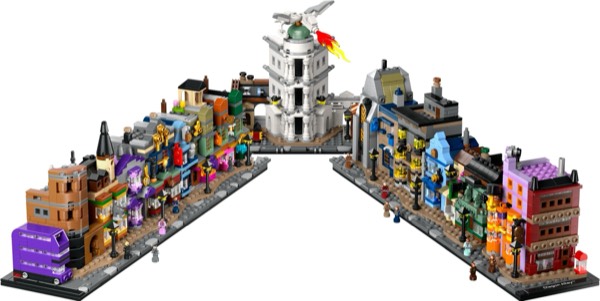
The obvious companion is Diagon Alley Wizarding Shops (76444), the set this one is explicitly designed to connect with via the shared arch technique. Displayed together, the contrast does the storytelling for you: the bright, welcoming storefronts of Diagon Alley beside the crooked, dim shops of Knockturn Alley, one street, two very different reputations.
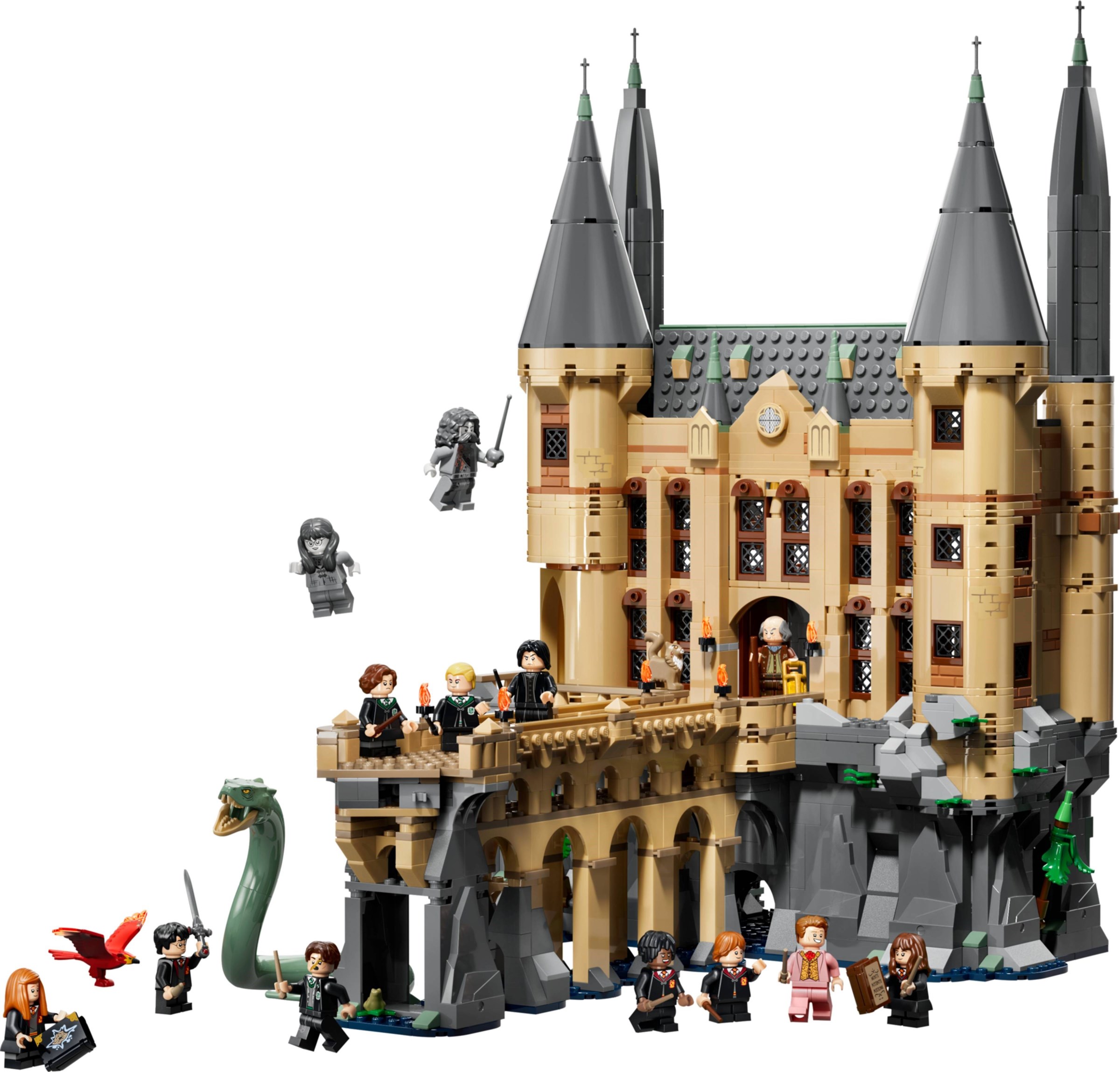
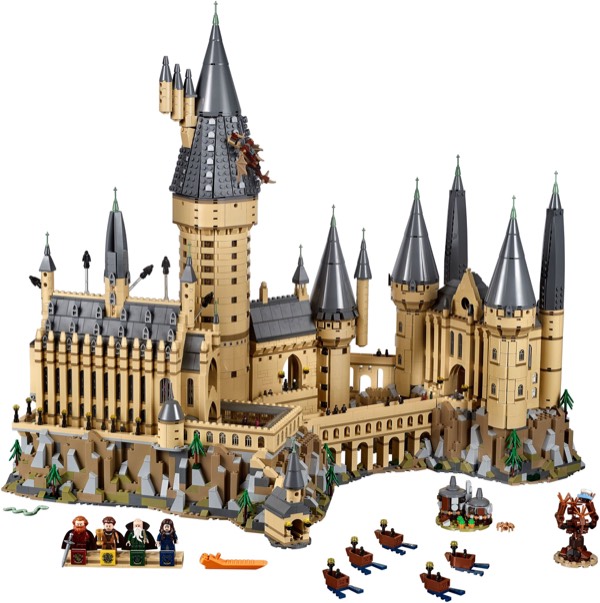
For collectors with deeper shelf space, the original Diagon Alley (75978) from the earlier era of wizarding world sets provides a useful scale and era comparison, showing how far LEGO's modular shop technique has evolved. Hogwarts Castle (71043) remains the anchor piece for most wizarding world displays, and Knockturn Alley works well as a smaller, atmospheric companion piece positioned to one side rather than competing for the castle's centerpiece status.
If you want to lean further into the darker material this set represents, pairing it with any Death Eater or Malfoy Manor themed minifigure packs you already own extends the tonal thread without requiring another full building purchase.
Pros
- Genuinely embraces the darker, uncomfortable tone of the source material
- Eight minifigures, six unique, including long-requested characters like Narcissa Malfoy
- Connecting arch technique makes this a true modular addition, not a standalone gimmick
- Interior detailing on both shops rewards close inspection
- Self-stirring cauldron and Hand of Glory add playful interactive touches
- Varied rooflines and window shapes avoid the repeated-module problem
- 25th anniversary collectible adds a nice bonus for long-time collectors
- Useful dark gray and weathered stone parts for MOC builders outside this theme
Cons
- Price per piece sits above the average for a set this size
- Full value depends on already owning or planning to own the connecting Diagon Alley range
- Compact footprint means less presence as a true standalone centerpiece
- Technique variety will feel familiar to builders with several modulars already completed
Knockturn Alley Wizarding Shops succeeds because it commits to being genuinely unsettling rather than watering down the source material for shelf-friendliness. The build experience is engaging without overstaying its welcome, the two shops read as distinct spaces with real character, and the minifigure lineup finally gives collectors figures they have been asking for since Half-Blood Prince first put Draco in this alley.
It earns its EXCELLENT rating on the strength of its display presence and its willingness to be tonally different from everything else in the wizarding world catalog, tempered slightly by a price point that assumes buy-in to the wider modular range for full value. If you already own Diagon Alley, this is close to essential. If you do not, it still stands on its own as a well detailed, atmospheric two-shop diorama.
Available now. For collectors building out a full Diagon Alley street scene, this is the set that finally makes the display feel complete, and honest, about which corners of the wizarding world people actually visit after dark.
- Best Harry Potter Display Sets - Where Knockturn Alley ranks against the rest of the wizarding world catalog
- New LEGO Sets, July 2026 - See what else launched alongside this release
- Rapunzel's Castle Review - Another 2026 licensed release with strong minifigure value
- Retiring Sets Tracker - Know when to buy before wizarding world sets leave shelves
- LEGO Investing 101 - How licensed minifigure-heavy sets tend to hold value
Track it in your vault on GameSetBrick - our free collection app. Log your condition, price paid, and watch the real-time market value.
Track in Your Vault →Save it to your wishlist on GameSetBrick. Share your list with friends and family - every set has a buy button so gift givers know exactly where to go.
Add to Wishlist → GameSetBrick is a free app by The Earl of Bricks. See all features. Scan it. Track it. Trade it.