Is the LEGO Dinosaur Fossils: Triceratops Worth Buying?
8.61/10. Worth buying. A posable Triceratops skeleton with a wetland base, an opening jaw, and a minifigure pulled straight from the original 1993 film.

I own the T. rex fossil set from a few years back, and I'll admit I approached this Triceratops with a specific worry: that LEGO would just repeat the same skeletal frame with different horns bolted on. That worry didn't survive contact with the actual instructions. The Triceratops presents a completely different engineering problem - a low, wide-bodied quadruped with a massive frilled skull, rather than a tall bipedal predator - and the build reflects that. The weight distribution, the leg posing, the neck frill articulation, none of it is a reskin. This is a fresh engineering exercise wearing a familiar fossil-display format.
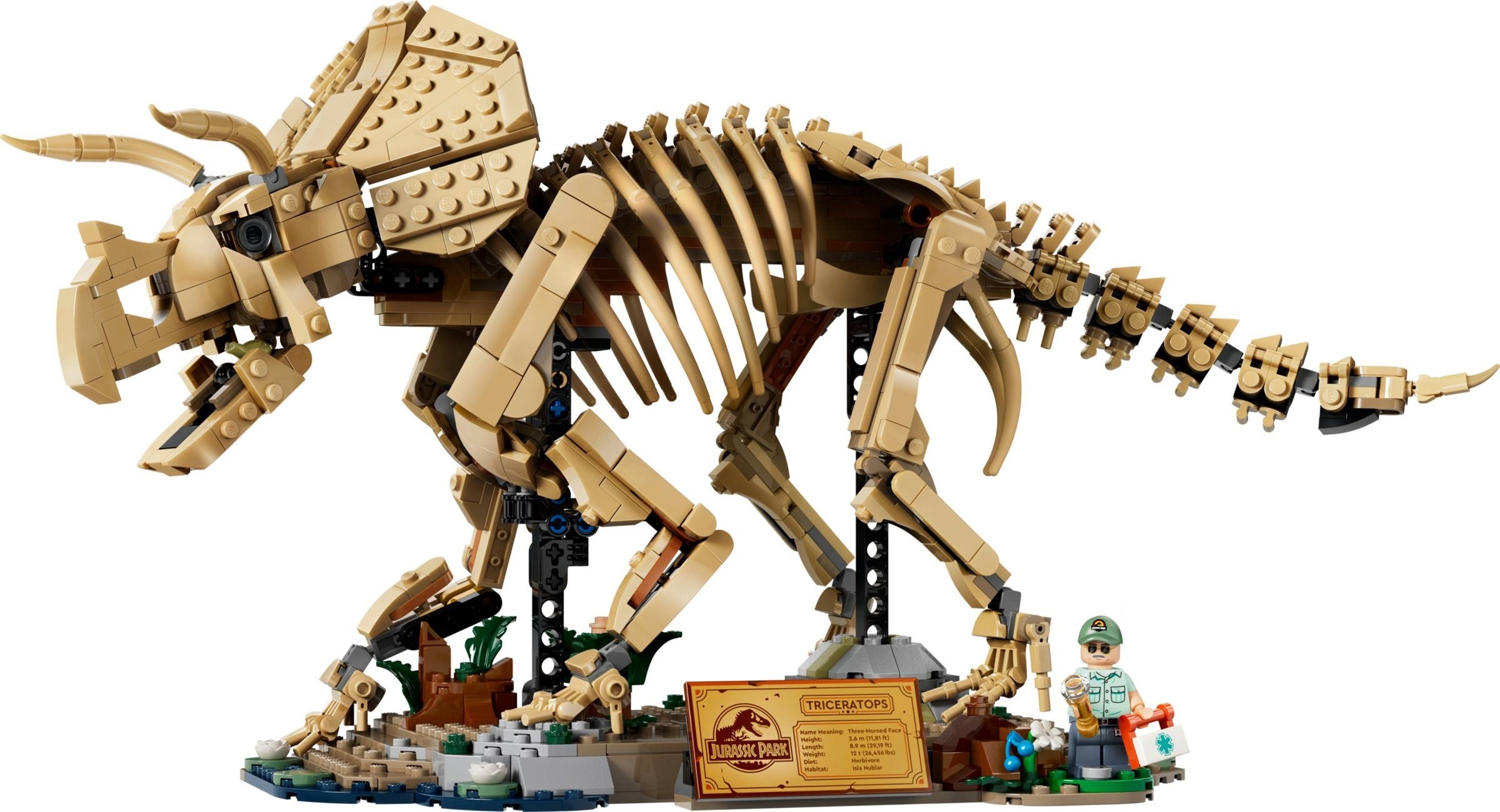
What sealed it for me is the minifigure. Instead of a generic paleontologist, LEGO included Dr. Gerry Harding, the character from the original 1993 Jurassic Park film who treats a sick Triceratops in one of the movie's quietest, most memorable scenes. That's a deep-cut choice for a franchise that could have leaned on any number of louder, more obvious characters. It tells me somebody on this design team actually cares about the source material, not just the dinosaur silhouette on the box.
At 1,154 pieces and a 1:21 scale, the Dinosaur Fossils: Triceratops is a substantial but manageable build, sitting comfortably in the multi-session weekend project category. Construction begins with the base and wetland environment stand, then moves into the skeletal leg assemblies, the ribcage and spine, and finally the show-stopping skull with its full frill and horn assembly.
The legs are where the engineering gets genuinely interesting. Because a Triceratops carries its weight on four sturdy limbs rather than balancing on two, LEGO builds each leg around a Technic-reinforced joint system that lets you pose the stance while keeping the finished model stable enough to display without sagging. Getting all four legs to sit level and support the substantial ribcage above them is a small triumph of the build, and you feel it click into place.
The skull and frill assembly is the technical centerpiece. The frill uses layered curved plates to achieve the fanned, bony shield shape, and the jaw is hinged to open and close, adding a play feature that a pure static display piece wouldn't bother with. The three horns are built as separate sub-assemblies that plug into precise sockets, and getting their angles to match reference photography of an actual Triceratops skull is clearly something the design team spent real time on.
The wetland base is a smaller but well-conceived section of the build, incorporating Cretaceous-period plant life and a few hidden Easter eggs worked into the terrain. It's a nice change of pace from skeletal construction, giving your hands a break with organic, plant-focused building techniques before returning to the bone structure. The included information plaque caps off the presentation with genuine paleontological context.
Plan for six to eight hours of build time. The instructions are clear and the sub-assembly breakdown is logical, moving from stand to legs to spine to skull in a sequence that builds naturally toward the most dramatic part of the model. There's a real sense of anticipation as the skeleton takes shape and you can already tell what the finished silhouette is going to look like well before you place the final horn.
At 43.2 cm long and 28.2 cm wide, this is a genuinely commanding display piece for its piece count, and the low, wide stance of a Triceratops gives it a completely different visual energy than the vertical drama of LEGO's earlier T. rex fossil release. Where the rex towers, the Triceratops sprawls - and that horizontal mass, combined with the fanned frill, creates a silhouette that reads as unmistakably Triceratops from any angle in the room.
The posable joints throughout the legs, tail, and head mean you're not locked into a single static pose. You can angle the head down as if grazing, raise it in a defensive stance, or swing the tail for a more dynamic presentation - small adjustments that let you personalize the display without touching a single brick. That flexibility is a meaningful upgrade over a purely fixed skeletal pose.
The bone-white and tan color palette is faithful to how fossil specimens are typically displayed in natural history museums, and the wetland base with its Cretaceous plant life adds environmental context that a bare skeleton on a plinth would lack. It's the difference between a display piece and a diorama, and that extra context genuinely elevates the presentation.
The information plaque and hidden Easter eggs reward close inspection, giving the set staying power beyond the initial build-and-display moment. Under warm shelf lighting, the tan and cream bone tones pick up soft shadow definition along the ribcage and frill ridges, which sells the fossil illusion convincingly from a normal viewing distance.
For 1,154 pieces at this price point, the value holds up well against LEGO's other Icons-tier display pieces. The specialized curved plate elements used in the frill and ribcage are purpose-built for this kind of organic skeletal shape, which limits their reuse in unrelated MOCs, but the sheer volume of tan and bone-white pieces gives serious builders useful raw material for other paleontology or architectural projects.
The Dr. Gerry Harding minifigure adds real collector value on its own. Character-accurate minifigures from the original 1993 film are relatively rare compared to the more frequently produced modern Jurassic World cast, and Harding specifically has almost never been available in this level of detail. For franchise collectors, that alone is a meaningful piece of the value equation independent of the dinosaur itself.
The posable joint system built into the legs, neck, and tail also represents genuine engineering investment that a static display piece wouldn't need. That mechanical complexity costs real design effort, and it shows up in a set that feels more considered than a simple skeleton-on-a-stand kit. If long-term value factors into your decision, LEGO's dinosaur fossil sub-theme has built a reliable following since it launched, and pieces with strong franchise tie-ins tend to hold collector interest well. Our retiring sets tracker is worth checking as this one moves through its production run.
The Triceratops holds a special place in Jurassic Park lore thanks to one of the original 1993 film's quieter, more affecting scenes: the discovery of a sick Triceratops lying in the underbrush, tended to by Dr. Gerry Harding, the park's chief veterinarian. Unlike the film's more famous action sequences, the sick Triceratops scene is contemplative, giving audiences a moment to simply marvel at a living, breathing dinosaur up close rather than fleeing from one. It's often cited by fans as the moment the film's wonder truly lands.
Beyond the film, the real Triceratops is one of the most recognizable dinosaurs in the fossil record, distinguished by its massive bony frill and three prominent facial horns - two above the eyes and one on the nose. It lived during the very end of the Cretaceous period, making it one of the last non-avian dinosaurs on Earth before the extinction event that ended the age of dinosaurs roughly 66 million years ago. Fossil evidence suggests the frill likely served both for display and species recognition, and possibly some degree of defense, though paleontologists continue to debate its full function.
Triceratops fossils are also notable for showing signs of combat, including bite marks that match Tyrannosaurus rex dentition, giving paleontological weight to the predator-prey dynamic the original film dramatized. Building a Triceratops model steeped in both real paleontology and franchise history gives this set a rare double layer of authenticity that a purely fictional dinosaur design could never match.
Jurassic Park and Jurassic World fans sit at the center of the audience, and the Dr. Gerry Harding minifigure specifically rewards longtime fans of the original film over more casual franchise followers. If the sick Triceratops scene stuck with you the way it's stuck with generations of viewers, this set is built with you in mind.
Paleontology enthusiasts and natural history buffs will appreciate the genuine attention to skeletal accuracy and the museum-style presentation, right down to the information plaque and wetland environmental base. This is a set that treats its subject with real respect rather than reducing it to a toy silhouette, and that respect comes through in every joint and horn placement.
For Icons and display-set collectors already building a fossil-themed shelf, this is an easy addition that pairs naturally with LEGO's earlier dinosaur releases. The posable joints also give hands-on builders more engagement than a purely static skeleton, which broadens the appeal beyond pure display collectors into builders who like a model they can still interact with after the last brick is placed.
The obvious companion is LEGO's earlier Dinosaur Fossils: T. rex (76964), which gives you the classic predator-prey pairing on the same shelf. The vertical drama of the rex skull towering over the horizontal sprawl of the Triceratops recreates one of paleontology's most iconic rivalries, and the shared bone-white and tan color language means the two models read as a cohesive set even though they were released years apart.
The Stegosaurus & Triceratops Discovery set (76940) makes a fun thematic bridge if you want to trace how LEGO's dinosaur offerings have evolved from smaller playset-scale builds into full Icons-tier fossil displays. Displaying the earlier, smaller Triceratops interpretation next to this considerably more detailed 2026 version is a neat way to show the theme's growth over time.
For builders who want to expand into a broader natural history shelf, pairing this with any of LEGO's botanical Icons sets adds environmental variety - ferns, orchids, or bonsai pieces alongside the wetland-based dinosaur creates a display that spans both prehistoric and modern natural history in one curated arrangement.
Pros
- Genuinely distinct engineering from LEGO's earlier fossil sets, not a reskin
- Posable legs, neck, and tail allow real display customization
- Opening jaw and articulated frill add interactive play value
- Dr. Gerry Harding minifigure is a deep, well-chosen franchise reference
- Wetland environmental base elevates the piece from skeleton to diorama
- Information plaque and hidden Easter eggs reward close inspection
- Faithful to real Triceratops paleontology, not just movie iconography
- Strong shelf presence at a manageable footprint
Cons
- Many curved frill and ribcage elements have limited reuse outside dinosaur builds
- Low, wide stance requires deep shelf space even though it isn't tall
- Only one minifigure included despite the rich cast of source material
- Frill assembly requires patience to get horn angles matching reference symmetry
The Dinosaur Fossils: Triceratops succeeds by treating its subject with genuine paleontological and cinematic respect. The posable skeletal engineering is a real technical achievement, the wetland base transforms a simple skeleton into a considered diorama, and the Dr. Gerry Harding minifigure is exactly the kind of deep-cut detail that rewards longtime fans of the franchise's quieter, more thoughtful original film.
It lands firmly in EXCELLENT territory thanks to strong build engagement, real display flexibility, and a level of subject-matter authenticity that a lot of licensed dinosaur sets skip entirely. It falls just short of masterpiece status only because some of the specialized frill and rib elements carry limited use beyond this specific build, a minor tradeoff for the accuracy those pieces buy you.
Available now, and a strong pick for anyone who has ever stood in front of a museum fossil display and wished they could take a piece of it home. This is that piece, engineered with real care.
- S.H.I.E.L.D. Helicarrier Review - Another 2026 flagship built for serious shelf presence
- Best LEGO Art and Display Sets - See where this Triceratops fits among our top display picks
- New LEGO Sets, July 2026 - What else launched this month
- LEGO Investing 101 - How franchise tie-ins affect long-term set value
- Retiring Sets Tracker - Track this set through its production run
Track it in your vault on GameSetBrick - our free collection app. Log your condition, price paid, and watch the real-time market value.
Track in Your Vault →Save it to your wishlist on GameSetBrick. Share your list with friends and family - every set has a buy button so gift givers know exactly where to go.
Add to Wishlist → GameSetBrick is a free app by The Earl of Bricks. See all features. Scan it. Track it. Trade it.