Is the LEGO SEGA Genesis Console Worth Buying?
8.15/10. Worth buying. Two detachable controllers, a cartridge slot that actually opens, and a slice of console-war history in 479 pieces.

I had a SEGA Genesis before I had a driver's license, and I still remember the specific click of a cartridge seating into that top-loading slot. LEGO clearly remembers it too, because that click is basically the entire point of this set. At 479 pieces, this isn't a huge build by Icons standards, but it doesn't need to be. The console-replica sets in this line have never been about piece count - they're about nailing the exact object from your memory well enough that setting it on a shelf triggers a full sensory flashback.
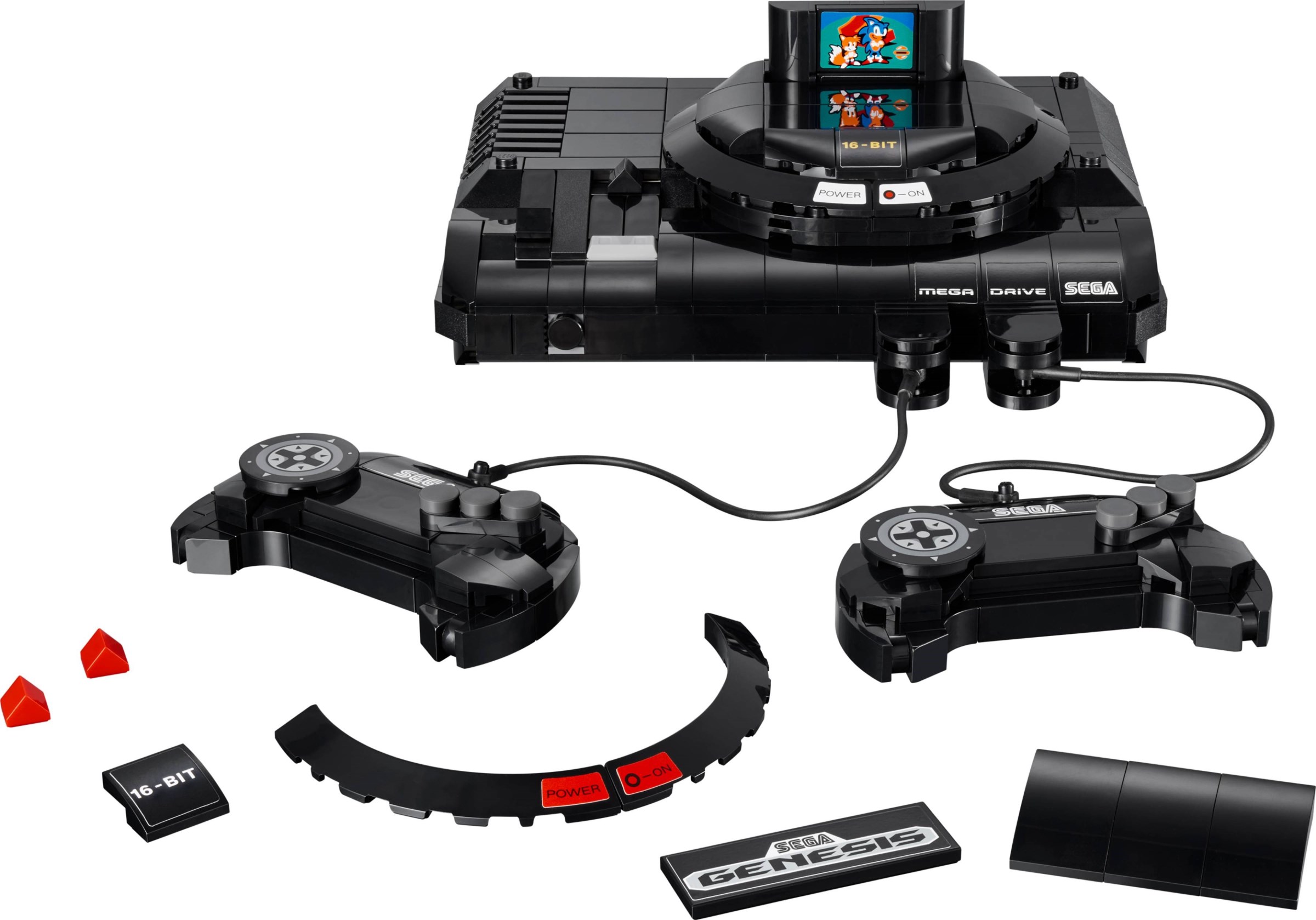
What impressed me most is that LEGO built in the actual branding fork. You can assemble this as the North American SEGA Genesis or the European and Japanese Mega Drive, and the choice isn't a sticker swap - it changes which printed elements and color accents you use. That's a level of respect for regional gaming history that a lot of retro-licensed products skip entirely, and it tells me the designers on this one actually cared about getting the console wars right, not just the console.
The SEGA Genesis Console comes in at 479 pieces, which puts it firmly in the weekend-afternoon category rather than the multi-session commitment of LEGO's larger Icons releases. The build starts with the base shell, works through the internal frame that gives the console its rigidity, and finishes with the cartridge door mechanism and the two detachable six-button controllers.
The cartridge slot is the technical centerpiece of the build. LEGO engineers a spring-free hinge and latch system using standard plate and tile geometry that lets the top-loading door swing open and closed convincingly, and dropping a printed cartridge tile into the slot is a small moment of tactile joy that the whole set is really built around. It's a simple mechanism dressed up in clever brick engineering, which is exactly the sweet spot this console-replica sub-theme has occupied since it started.
The controllers are a genuinely fun secondary build. Each one assembles the six-button layout with individually placed 1x1 round tiles for the buttons, and the D-pad uses a cross-plate technique that's become something of a signature move across LEGO's retro gaming sets. Building two identical controllers back to back reinforces the technique without feeling repetitive, since by the second one you're moving fast and confident.
Where this set separates itself from a purely decorative build is the choice between Genesis and Mega Drive branding partway through construction. That decision point adds a small layer of engagement that most single-path builds don't have - you're not just following instructions, you're making a call about which version of gaming history you want sitting on your shelf. For builders who grew up on one side of that regional divide, the choice carries real nostalgic weight.
Expect two to three hours of build time in a single relaxed sitting. The instructions are clean and the bag count is minimal given the piece total, which keeps the pacing brisk without ever feeling rushed. This is an accessible build for less experienced builders while still offering enough mechanical interest to hold a veteran's attention.
At roughly 16 cm wide and 12 cm deep, the finished console sits comfortably on a shelf without demanding much real estate, which is part of its appeal next to LEGO's larger, space-hungry Icons flagships. The proportions are notably accurate - the Genesis's distinctive black slab silhouette with the red accent stripe is instantly recognizable from across a room, and the model doesn't cheat the scale relationships the way some smaller replica sets are forced to.
The two detachable controllers are the design highlight. They plug into ports on the front of the console via short printed cable elements, and you can pose them draped naturally in front of the unit or tucked to the side, which gives the display a lived-in quality rather than a stiff museum-piece stance. It's a small touch, but it's the difference between a console model and a console diorama.
Color accuracy carries this set. The matte black shell, the correct red stripe placement, and the printed logo tile on the front all read as faithful to the real hardware rather than an approximation built from whatever colors happened to be in LEGO's standard palette. Under shelf lighting, the black plastic-look bricks catch just enough sheen to suggest the real console's finish, and the red accent pops without looking cartoonish.
This is a set designed to be displayed alongside other electronics, not in isolation. It reads best as part of a retro tech shelf - next to a CRT-style display or grouped with LEGO's other console builds - rather than as a solitary centerpiece. Its modest footprint is a feature there, letting it slot into a curated collection without dominating the space.
For 479 pieces at this price point, the value proposition is strong, particularly for a set with this much nostalgic pull. The parts selection leans on black and dark bluish gray elements with useful small-scale plate and tile work, which makes for solid MOC utility even outside a retro-tech context. The printed cartridge and controller cable pieces are the standout specialty elements and the ones most likely to hold individual collector interest.
Two included controllers effectively double the interactive value of the set relative to a single static console replica, and the detachable design means you get real posability without any extra cost beyond the piece count already baked into the retail price. For a set built primarily around nostalgia rather than raw scale, that's smart design economy.
From a collecting standpoint, LEGO's console-replica sub-theme has built a loyal following, and entries like the Game Boy and the Nintendo Entertainment System have held up well in secondary interest after their runs matured. The Genesis carries similar crossover appeal into gaming collector circles well beyond the traditional LEGO audience, which tends to be a good sign for a set's staying power. If long-term value factors into your decision, our retiring sets tracker is worth bookmarking as this one matures through its production run.
SEGA launched the Genesis in North America in 1989, positioning it directly against Nintendo's dominant NES with a marketing campaign built on raw attitude: faster processing, edgier games, and the now-legendary tagline "Genesis does what Nintendon't." It was one of the first genuinely successful direct challenges to Nintendo's console monopoly, and it kicked off what gaming historians still call the console wars - a rivalry that defined an entire generation of marketing and product design in the industry.
Outside North America, the same hardware shipped as the Mega Drive, a naming difference driven by trademark conflicts in various territories. The Mega Drive branding carried a different visual identity in places like Japan and Europe, and LEGO building both options into this single set is a genuinely thoughtful nod to how differently this console was experienced depending on where in the world you grew up with it.
The Genesis's signature moment arrived in 1991 with the launch of Sonic the Hedgehog, a mascot built specifically to counter Nintendo's Mario and to showcase the console's speed advantage. Sonic's success helped the Genesis capture meaningful market share against the SNES in North America for the first time in the console war, and the Genesis remains one of the best-selling consoles of the fourth generation. Building this console in LEGO form is building a small piece of the moment gaming stopped being a Nintendo monopoly.
Anyone who owned a Genesis or Mega Drive growing up is the obvious core audience, and this set delivers pure nostalgia for that crowd. If you remember blowing into a cartridge that wasn't reading, or the specific feel of that six-button controller during a Streets of Rage session, this model recreates the object with enough fidelity to trigger real memory. It's an easy, satisfying gift for anyone in that demographic.
Retro gaming collectors more broadly will appreciate this as a natural addition to a growing shelf of console-replica builds. LEGO has been steadily expanding this sub-theme, and the Genesis fills a gap that SEGA fans in particular have been waiting on since the Game Boy and NES releases established the format. If you're already collecting this line, this is an easy yes.
For builders newer to the hobby or those wanting a lower-commitment weekend project, this set is an accessible entry point into LEGO's adult-focused Icons line without the time investment of a flagship. At under 500 pieces, it's approachable without feeling insubstantial, which makes it a smart gift for someone testing whether they enjoy this side of the hobby.
The obvious pairing is LEGO's Nintendo Entertainment System (71374), which gives you both sides of the original console war sitting side by side on the same shelf. The visual contrast between the NES's gray-and-red boxiness and the Genesis's sleek black slab tells the story of two very different design philosophies from the same console generation, and displaying them together is a genuinely fun bit of gaming history curation.
The LEGO Game Boy (21331) extends the display into handheld territory and rounds out a retro gaming trio that spans home console and portable formats. Its compact scale complements the Genesis without competing for shelf space, and the olive-and-gray Game Boy color scheme provides visual variety against the Genesis's black and red.
For builders who want to lean fully into a dedicated retro tech shelf, grouping these console replicas with era-appropriate accessories - a small CRT-style build, cartridge stand pieces, or simply arranged chronologically by release year - turns three individual sets into a genuine gaming history exhibit. Each set holds its own scale and color identity well enough that the group reads as curated rather than cluttered.
Pros
- Genuine choice between Genesis and Mega Drive branding during the build
- Working cartridge slot mechanism is a satisfying tactile detail
- Two detachable, posable controllers add real display flexibility
- Highly accurate proportions and color scheme for the finished silhouette
- Accessible two to three hour build time for less experienced builders
- Strong nostalgic pull for anyone who grew up with the console
- Compact footprint fits easily into a curated shelf display
- Excellent value for the piece count and level of detail delivered
Cons
- Modest piece count means a shorter build than LEGO's flagship Icons sets
- Technique variety is limited compared to larger, more ambitious builds
- No included game cartridge tiles beyond the one printed piece
- Display impact depends on being paired with other retro tech pieces
The SEGA Genesis Console is a well-executed entry in LEGO's retro gaming sub-theme, delivering accurate proportions, a satisfying cartridge mechanism, and a thoughtful nod to console-war history through its Genesis-or-Mega-Drive build choice. It doesn't try to be more than what it is - a faithful, affordable homage to a beloved piece of gaming hardware - and it succeeds cleanly within that scope.
It earns solid EXCELLENT marks rather than masterpiece status because the build, while enjoyable, doesn't introduce the kind of ambitious technique variety that defines LEGO's true flagship releases. That's not a knock against the set so much as an honest accounting of what a 479-piece console replica can reasonably deliver. Within its own lane, it's very close to ideal.
Available now, and an easy recommendation for anyone with Genesis or Mega Drive nostalgia, or anyone building out a retro gaming shelf. It's a small set that punches well above its piece count in pure shelf charm.
- Dinosaur Fossils: Triceratops Review - Another 2026 Icons release, this one built for full display drama
- New LEGO Sets, July 2026 - See what else launched this month
- Best LEGO Sets for Adults in 2026 - Where this console lands in our full-year rankings
- LEGO Investing 101 - Why nostalgia-driven sets like this one tend to age well
- Retiring Sets Tracker - Track this set's production run over time
Track it in your vault on GameSetBrick - our free collection app. Log your condition, price paid, and watch the real-time market value.
Track in Your Vault →Save it to your wishlist on GameSetBrick. Share your list with friends and family - every set has a buy button so gift givers know exactly where to go.
Add to Wishlist → GameSetBrick is a free app by The Earl of Bricks. See all features. Scan it. Track it. Trade it.